
Many men assume that low testosterone is simply part of getting older.
Age can influence testosterone levels, but it is far from the only factor.
Body fat, poor sleep, certain medications, diabetes, chronic illness, problems with the testicles or pituitary gland, and even previous steroid use can all affect testosterone production.
That matters because some of these causes may be treatable or reversible.
The Endocrine Society emphasized this again in 2026, stating that doctors should look for reversible contributors such as obesity and certain medications before assuming low testosterone is simply due to aging. Endocrine Society
So if your energy, sex drive, muscle mass, or motivation have changed, the smartest question may not be:
Am I just getting old?
It may be:
What else could be affecting my testosterone?
First, What Does Low Testosterone Actually Mean?
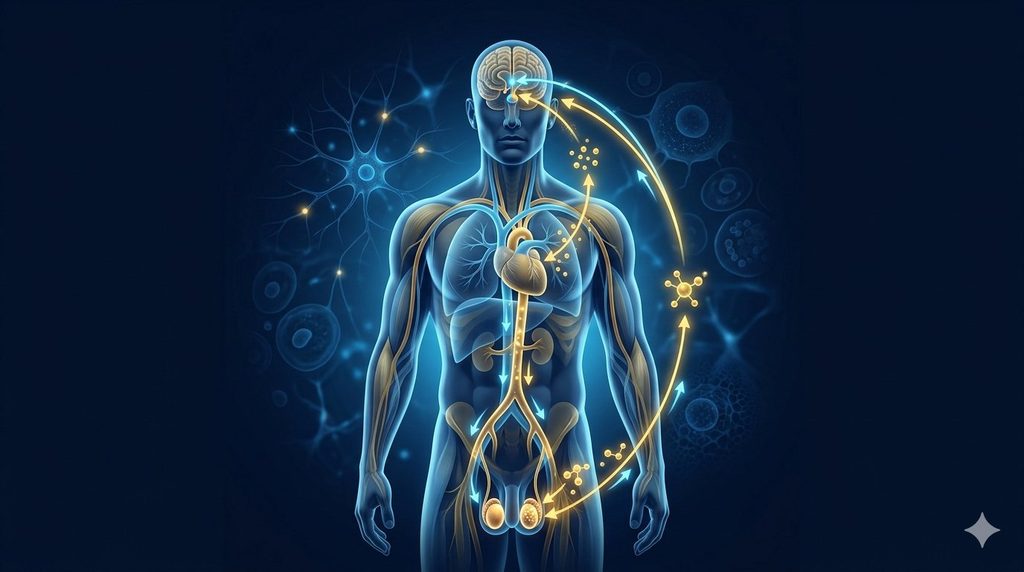
Testosterone is produced mainly in the testicles.
But the process starts in the brain.
The hypothalamus and pituitary gland send hormonal signals telling the testicles how much testosterone to produce.
Problems anywhere along that system can potentially lower testosterone.
Doctors generally divide testosterone deficiency into two broad categories.
Primary hypogonadism
This occurs when the testicles themselves cannot produce enough testosterone.
Secondary hypogonadism
This occurs when the brain or pituitary gland does not send the proper signals to the testicles.
Understanding the difference can help doctors determine what is actually causing the problem. Mayo Clinic
1. Excess Body Fat
This is one of the most important causes for men over 40.
Obesity is strongly associated with low testosterone.
Fat tissue is not simply stored energy.
It is biologically active and can affect hormones, inflammation, insulin sensitivity, and metabolism.
Men with obesity are much more likely to have low testosterone than leaner men.
The Endocrine Society estimates that roughly 30 to 50 percent of men with obesity or type 2 diabetes may have hypogonadism. Endocrine Society
This does not mean every overweight man has testosterone deficiency.
But the connection is strong enough that body composition should be considered when testosterone levels are low.
Can losing weight help?
Sometimes.
The Endocrine Society stated in 2026 that for appropriately diagnosed low testosterone associated with excess weight or obesity, with no other identified cause, weight loss is typically the first treatment approach rather than immediately starting testosterone therapy. Endocrine Society
That is encouraging because it means some men may be able to improve testosterone by improving metabolic health.
Related article: Belly Fat and Low Testosterone, The Connection Men Over 40 Should Know
2. Poor Sleep
Sleep is one of the most overlooked parts of hormone health.
Your body does important hormonal work while you sleep.
Repeated poor sleep can affect energy, appetite, glucose regulation, recovery, mood, and hormone function.
But there is another problem men should know about.
Sleep apnea
Obstructive sleep apnea causes breathing to repeatedly stop and restart during sleep.
It is particularly common among men who:
Snore heavily.
Carry excess abdominal weight.
Wake frequently.
Feel exhausted during the day.
Wake with headaches.
Mayo Clinic lists untreated obstructive sleep apnea as one condition that may contribute to hypogonadism. Testosterone problems may sometimes improve when the sleep disorder is properly treated. Mayo Clinic
If you sleep eight hours but still wake up exhausted, the problem may not simply be that you need more sleep.
The quality of that sleep matters too.
3. Type 2 Diabetes and Insulin Resistance
Testosterone and metabolic health frequently overlap.
Men with type 2 diabetes are more likely to have low testosterone than men without diabetes. Endocrine Society
Several factors may contribute.
These can include:
Excess visceral fat
Insulin resistance
Inflammation
Poor sleep
Reduced physical activity
Other metabolic problems
This does not mean diabetes automatically causes low testosterone.
It means the two conditions frequently occur together.
And treating low testosterone with testosterone therapy is not considered a treatment for diabetes itself. The Endocrine Society specifically recommends against using testosterone therapy simply as a way to improve blood sugar control. Endocrine Society
4. Certain Medications
This one surprises many men.
Some medications can interfere with testosterone production.
The Endocrine Society lists medications, including opioid pain medicines and corticosteroids, among possible contributors to low testosterone. Endocrine Society
Opioids can interfere with hormonal signals between the brain and testicles.
Long-term corticosteroid exposure may also affect hormone production.
This does not mean you should stop taking prescribed medication.
That could be dangerous.
Instead, if you are experiencing symptoms of testosterone deficiency, make sure your healthcare provider knows everything you take, including:
Prescription medications
Over-the-counter medicines
Supplements
Hormones
Previous steroid use
Sometimes the medication list provides an important clue.
5. Anabolic Steroid Use
This deserves special attention.
Men sometimes use anabolic steroids or testosterone products to gain muscle or improve athletic performance.
But taking testosterone from outside the body can tell the brain:
We already have enough testosterone. Stop producing more.
As a result, natural testosterone production can fall dramatically.
After anabolic steroids are stopped, hormone production may eventually recover.
But recovery can take time, and in some cases problems can persist.
The Endocrine Society specifically lists anabolic steroid use as a possible cause of hypogonadism. Endocrine Society
This is another reason testosterone should not be treated like an ordinary muscle building supplement.
It changes the body’s hormonal system.
6. Problems With the Pituitary Gland
The pituitary gland is tiny, but it plays a major role in testosterone production.
It produces hormones that signal the testicles to make testosterone.
If the pituitary gland is not functioning correctly, testosterone production can fall even when the testicles themselves are healthy.
Potential causes include:
Pituitary tumors
High prolactin levels
Certain brain tumors
Surgery
Radiation treatment
Other pituitary disorders
Mayo Clinic notes that pituitary conditions can disrupt the hormonal signals required for normal testosterone production. Mayo Clinic
This is why doctors sometimes order additional hormone tests after finding low testosterone.
The testosterone number tells you there may be a problem.
It does not necessarily tell you where the problem started.
7. Testicular Injury or Infection
Because most testosterone is produced in the testicles, damage to them can reduce hormone production.
Possible causes include:
Physical trauma
Certain infections
Cancer treatment
Surgery
Previous testicular problems
Mumps infection affecting the testicles can also damage testosterone-producing tissue in some cases. Mayo Clinic
Damage to one testicle does not necessarily result in low testosterone because the remaining healthy testicle may compensate.
Damage affecting both testicles is more concerning.
8. Cancer Treatment
Chemotherapy and radiation can affect testosterone production and fertility.
The effect depends on factors including:
Type of cancer
Treatment used
Dose
Treatment location
Age
Individual response
For some men, testosterone production eventually recovers.
For others, the effects can be long-lasting. Mayo Clinic
Men who have undergone cancer treatment and later develop symptoms such as low libido, loss of muscle, fatigue, or fertility problems should discuss hormone testing with their healthcare provider.
9. Chronic Medical Conditions
Low testosterone can occur alongside several chronic health problems.
The Endocrine Society lists conditions including:
Chronic liver disease
Kidney disease
Obesity
Type 2 diabetes
HIV
Sleep disorders
as possible contributors to low testosterone. Endocrine Society
Serious illness can disrupt normal hormone signaling.
This is another reason treating the underlying health problem can sometimes be more important than immediately focusing on testosterone replacement.
10. Genetic Conditions
Some men have conditions that affect testosterone production from birth, although they may not always be diagnosed early.
Examples include:
Klinefelter syndrome
Kallmann syndrome
Hemochromatosis
These conditions can affect either the testicles or the hormonal signals controlling them. Mayo Clinic
They are much less common than obesity, sleep problems, or metabolic disease, but they matter when doctors are trying to determine why testosterone is unusually low.

What Symptoms Should Men Pay Attention To?
Possible symptoms of testosterone deficiency include:
Reduced sex drive
Loss of spontaneous erections
Reduced muscle mass
Lower energy
Difficulty concentrating
Changes in mood
Infertility
Reduced body hair
Loss of bone density
Hot flashes when testosterone is extremely low
However, these symptoms can have many causes.
Fatigue can come from sleep apnea.
Poor libido can come from stress or depression.
Loss of strength can come from inactivity.
Erectile dysfunction can be related to cardiovascular disease or diabetes.
That is why symptoms alone are not enough to diagnose low testosterone. Endocrine Society
How Is Low Testosterone Properly Diagnosed?
This part is important.
You should not diagnose yourself based on how you feel or from an online symptom checklist.
The Endocrine Society recommends diagnosing hypogonadism only when a man has:
Symptoms consistent with testosterone deficiency
and
Consistently low testosterone levels measured accurately in blood tests. Endocrine Society
Testosterone is normally highest earlier in the day, so testing is commonly performed in the morning.
If testosterone is low, the measurement is generally repeated to confirm the result. Mayo Clinic notes that testing is commonly done between about 8 and 10 in the morning and may be repeated on another day. Mayo Clinic
Additional testing may include hormones such as LH and FSH to help determine whether the problem originates in the testicles or in the brain and pituitary system. Endocrine Society
Depending on the situation, doctors may also investigate:
Prolactin
Pituitary function
Other hormones
Semen analysis
Genetic conditions
Pituitary imaging
The goal should not simply be finding a low number.
The goal is finding why that number is low.
Should You Immediately Start TRT?
Not necessarily.
Testosterone replacement therapy can be very useful for appropriately diagnosed men.
But it is not the automatic answer every time testosterone is low.
Suppose the main cause is:
Obesity
Poor sleep
Untreated sleep apnea
Medication effects
Poor metabolic health
Another medical condition
In those cases, addressing the underlying problem may be an important first step.
The Endocrine Society emphasized in 2026 that accurate diagnosis and investigation of reversible causes should come before indiscriminate testosterone prescribing. Endocrine Society
TRT can also affect fertility and requires appropriate monitoring.
This is a medical treatment.
It should be treated like one.
What Can Men Over 40 Do Now?
If you are concerned about low testosterone, start with the things you can control.
Improve Your Waistline
Excess body fat, especially abdominal fat, is strongly connected with metabolic and hormone health.
Strength Train
Resistance training helps preserve muscle and supports healthy body composition.
Fix Your Sleep
Aim for consistent sleep and do not ignore signs of sleep apnea.
Improve Metabolic Health
Pay attention to blood sugar, blood pressure, cholesterol, activity levels, and waist circumference.
Review Your Medications
Ask your healthcare provider whether any medications could be contributing to your symptoms.
Do not stop prescribed medication on your own.
Get Proper Testing
If symptoms persist, get evaluated instead of guessing.
One laboratory result or one symptom does not tell the whole story.

The Bottom Line
Getting older can influence testosterone.
But age is not the only reason testosterone falls.
For many men, other factors may be involved:
Excess body fat
Sleep apnea
Poor sleep
Diabetes
Certain medications
Chronic illness
Previous anabolic steroid use
Testicular problems
Pituitary disorders
Cancer treatment
Some of these causes can potentially be improved.
Others require medical treatment.
That is why the smartest approach is not simply trying to “boost testosterone.”
Find out why it is low first.
Understanding the cause gives you a much better chance of choosing the right solution.
Medical Disclaimer
This article is for educational purposes only and is not intended to diagnose, treat, cure, or prevent any disease. Symptoms associated with low testosterone can have many different causes. If you are experiencing persistent symptoms or are concerned about your hormone levels, speak with a qualified healthcare professional for appropriate testing and evaluation.