
Turning 40 does not suddenly switch off your testosterone.
But testosterone levels do tend to decline gradually with age, and for some men that decline can become noticeable.
The important part is this:
Not every change you feel after 40 is caused by low testosterone.
Low energy, reduced sex drive, belly fat, poor sleep, weaker workouts, and mood changes can all have other causes.
That is why understanding what actually changes matters more than chasing a testosterone number.
What Happens to Testosterone as Men Get Older?
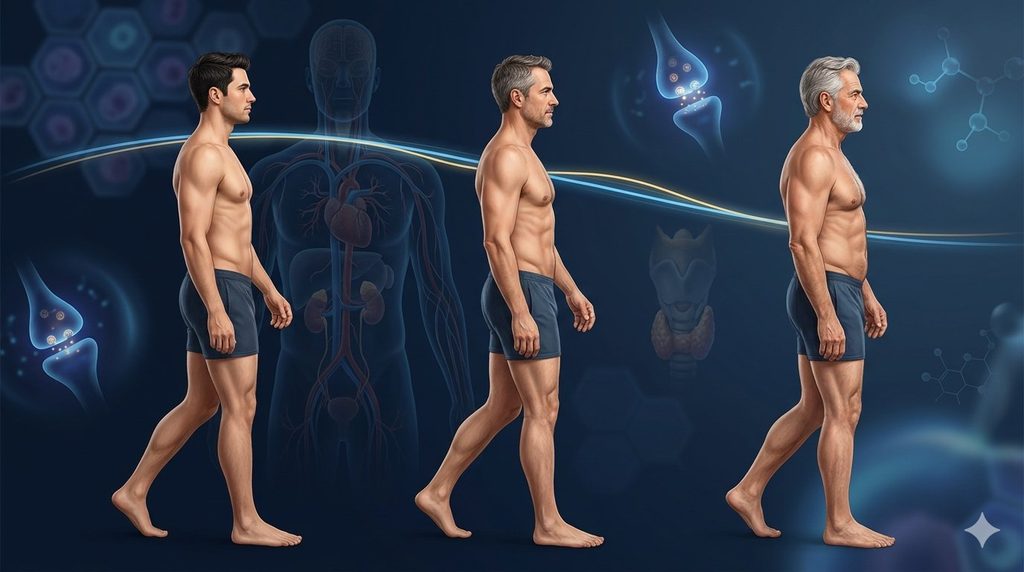
Testosterone levels generally peak during adolescence and early adulthood.
After about age 30 to 40, testosterone tends to decline gradually over time. Mayo Clinic notes that the average decline is often around 1 percent per year, although the rate varies considerably between men. Mayo Clinic
That sounds straightforward, but real life is more complicated.
Two men of the same age can have very different testosterone levels.
Factors such as:
Body fat
Sleep
Medications
Diabetes
Chronic illness
Physical activity
Alcohol use
Testicular health
Pituitary function
can all influence testosterone.
So age alone does not tell you whether your testosterone is healthy.
Low Testosterone and Normal Aging Are Not the Same Thing
This distinction matters.
A gradual age related decline is not automatically the same as hypogonadism, the medical condition in which the body does not produce enough testosterone.
The Endocrine Society emphasized in 2026 that terms such as “age related” or “late onset” low testosterone can blur the line between normal aging and an actual medical disorder. Endocrine Society
A man should generally have both:
Symptoms consistent with testosterone deficiency
and
Consistently low testosterone measurements
before being diagnosed with hypogonadism. Endocrine Society
Simply being 50 and tired is not enough.
What Does Testosterone Actually Do?
Testosterone affects several systems in the male body.
It helps support:
Muscle mass
Strength
Bone density
Sex drive
Sperm production
Red blood cell production
Body hair
Fat distribution
Mood and wellbeing
That is why significant testosterone deficiency can produce symptoms affecting much more than sexual function.
Common Symptoms Associated With Low Testosterone
Possible symptoms include:
Reduced sex drive
Fewer spontaneous erections
Loss of muscle
Reduced strength
Low energy
Difficulty concentrating
Mood changes
Increased body fat
Reduced facial or body hair
Lower bone density
Infertility
However, these symptoms overlap with many other conditions. Mayo Clinic notes that adult hypogonadism may involve reduced libido, lower energy, depression, erectile difficulties, loss of muscle, infertility, and loss of bone mass. Mayo Clinic
That overlap is why testing matters.
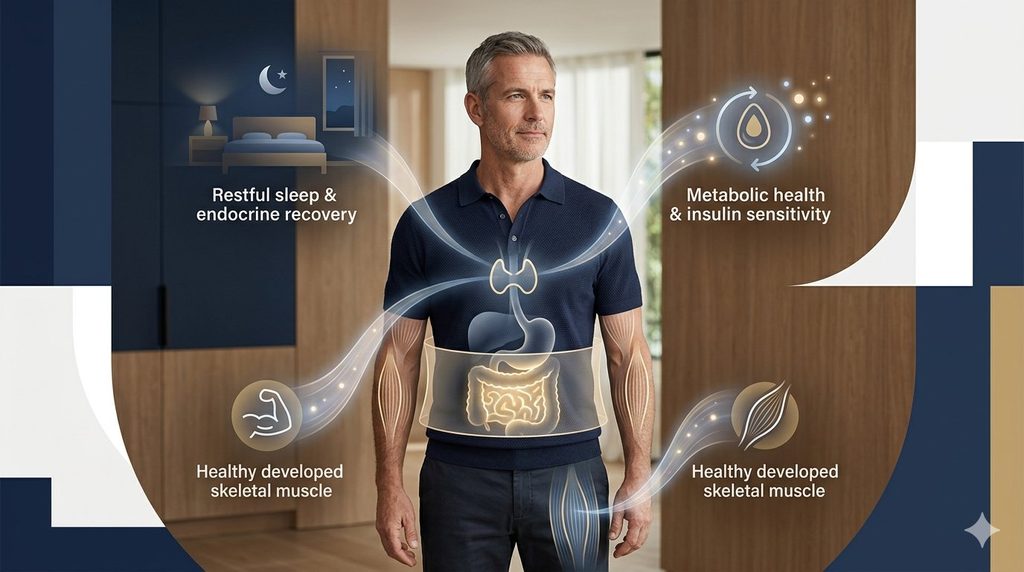
Why Belly Fat Matters More After 40
One of the biggest changes many men notice after 40 is increasing abdominal fat.
This can create problems beyond appearance.
Excess body fat is strongly associated with lower testosterone, particularly when fat is stored around the abdomen.
Obesity is also one of the reversible contributors doctors are encouraged to consider when testosterone levels are low. The Endocrine Society currently recommends weight loss as a first-line approach for appropriately diagnosed men whose low testosterone is associated with overweight or obesity and no other identified cause. Endocrine Society
That does not mean losing weight guarantees normal testosterone.
But improving body composition can sometimes improve the hormonal environment.
Related Article: Belly Fat and Low Testosterone: The Connection Men Over 40 Should Know
Muscle Becomes More Important, Not Less
Men tend to lose muscle as they age, especially when strength training disappears from their routine.
That can affect:
Strength
Mobility
Metabolism
Blood sugar control
Body composition
Testosterone helps support muscle, but muscle loss after 40 does not automatically mean testosterone is low.
Inactivity is often part of the problem.
Regular resistance training can help preserve muscle even as you get older.
The goal is not to train like you did at 22.
The goal is to stay strong enough to keep doing the things you want to do at 50, 60, and beyond.
Sleep Can Affect the Picture
Poor sleep deserves more attention than it usually gets.
Men who regularly sleep poorly may experience:
Low energy
Reduced concentration
Poor recovery
Higher appetite
Lower exercise performance
Mood changes
Lower libido
Those symptoms can look remarkably similar to low testosterone.
Obstructive sleep apnea is particularly important because untreated sleep apnea is associated with hypogonadism in some men. Mayo Clinic
If you snore heavily, wake frequently, or remain exhausted despite spending enough time in bed, discussing sleep apnea with a healthcare professional may be more useful than buying a testosterone booster.
What About Sex Drive?
Libido often receives the most attention when testosterone is discussed.
Testosterone does play an important role in sexual desire.
But libido can also change because of:
Stress
Depression
Poor sleep
Relationship problems
Medications
Alcohol
Chronic illness
Diabetes
So low libido does not automatically equal low testosterone.
The same applies to erectile dysfunction.
Erections depend heavily on blood flow and nerve function, not testosterone alone.
Does Testosterone Affect Mood and Energy?
It can.
Men with genuine testosterone deficiency may experience low energy or mood changes.
But this area is especially easy to oversimplify.
Fatigue can come from:
Sleep apnea
Depression
Anemia
Thyroid problems
Diabetes
Poor diet
Medication side effects
Chronic stress
Overtraining
Underactivity
The Endocrine Society specifically warns that symptoms such as low energy, low mood, and reduced libido are common in aging men and can have many causes. Endocrine Society
That is why treating symptoms without investigating their cause can lead you in the wrong direction.
Should Every Man Over 40 Get Testosterone Tested?
No.
Routine population screening is not currently recommended for men who have no symptoms. Endocrine Society
Testing becomes more reasonable when symptoms are persistent and consistent with testosterone deficiency.
Examples might include:
Significant reduction in libido
Loss of spontaneous erections
Unexplained muscle loss
Persistent low energy
Infertility
Reduced body hair
Loss of bone density
Other concerning hormonal symptoms
How Is Testosterone Tested?
Testosterone is usually measured with a blood test.
Because levels are generally highest earlier in the day, testing is commonly performed in the morning.
Mayo Clinic notes that testing is often done between about 8 and 10 a.m., and abnormal results may need to be repeated on another day. Mayo Clinic
The Endocrine Society also recommends confirming low testosterone with a repeat morning measurement rather than diagnosing hypogonadism from a single result. Endocrine Society
Depending on the result, additional testing may be used to investigate the cause.
What Can You Actually Do About Testosterone After 40?
This is where men often make things too complicated.
Start with the basics.
1. Reduce Excess Abdominal Fat
If you are carrying significant excess body fat, improving body composition may help overall metabolic and hormone health.
Aim to lose fat while preserving muscle.
2. Strength Train
Resistance training helps maintain muscle, strength, bone health, and metabolic function.
Two or three well planned sessions per week can be enough to make meaningful progress.
3. Get Serious About Sleep
Aim for consistent, good quality sleep.
Do not ignore symptoms of sleep apnea.
4. Eat Enough Protein
Protein helps support muscle maintenance and recovery.
Build meals around practical sources such as:
Eggs
Fish
Chicken
Lean meat
Greek yogurt
Beans
Lentils
5. Stay Physically Active
Walking is simple but effective.
Daily movement supports cardiovascular health, weight management, blood sugar control, and overall fitness.
6. Limit Excess Alcohol
Heavy alcohol intake can interfere with sleep, body composition, sexual health, and overall hormone function.
7. Review Your Medications
Certain medications can affect testosterone.
Do not stop a prescribed medication yourself.
Instead, discuss your symptoms and medications with your healthcare provider.

What About Testosterone Boosting Supplements?
Be skeptical.
The supplement market is full of products promising to:
Restore youthful testosterone
Increase muscle
Improve erections
Burn belly fat
Boost energy
Some individual ingredients may have limited evidence in certain circumstances.
But most men with clinically low testosterone need a proper diagnosis, not a bottle labeled “T Booster.”
If testosterone is low because of:
Obesity
Sleep apnea
Medication effects
Pituitary disease
Testicular injury
Chronic illness
a generic supplement may completely miss the cause.
Related Article: What Causes Low Testosterone Besides Aging?
When Does TRT Make Sense?
Testosterone replacement therapy can be appropriate for some men with properly diagnosed hypogonadism.
TRT may improve symptoms such as sexual function and can help maintain muscle, bone, and other testosterone dependent functions in appropriately selected patients. Mayo Clinic
But TRT is not simply an anti aging treatment.
The Endocrine Society advises weighing benefits against risks and stresses accurate diagnosis before treatment. Recent large trials found no meaningful increase in heart attack or stroke over roughly one to four years, but they also identified concerns including higher pulmonary embolism risk and more fractures among testosterone treated participants. Endocrine Society
TRT can also affect fertility.
This is why treatment decisions belong in a medical conversation, not in a supplement advertisement.
What Testosterone Therapy Can and Cannot Do
It is easy to assume TRT will fix every symptom of aging.
The evidence is more nuanced.
NIH supported Testosterone Trials in older men found improvements in sexual function, anemia, and bone strength and density.
But testosterone treatment did not meaningfully improve every area. Effects on vitality were limited, and cognitive function did not improve in those trials. National Institute on Aging
That is an important reality check.
Even when testosterone treatment is appropriate, it is not a fountain of youth.
A Better Goal Than “Boosting Testosterone”
Trying to maximize testosterone is the wrong goal.
The better goal is:
Healthy testosterone for your body, combined with good metabolic health, strength, sleep, cardiovascular health, and sexual wellbeing.
That may involve medical treatment for some men.
For others, improving weight, sleep, activity, nutrition, or an underlying health problem may be far more important.
The Bottom Line
Testosterone does tend to decline as men get older.
But turning 40 does not automatically mean you have low testosterone.
And symptoms such as fatigue, belly fat, poor libido, or weaker workouts do not prove you have a hormone problem.
The smartest approach is:
Pay attention to symptoms.
Improve the factors you can control.
Get properly tested when symptoms justify it.
Find the cause before choosing the treatment.
Healthy aging is not about trying to make your hormone levels look like they did when you were 20.
It is about keeping your body strong, functional, metabolically healthy, and capable for the decades ahead.
Medical Disclaimer
This article is for educational purposes only and is not medical advice. Testosterone symptoms can have many causes, and treatment decisions should be based on proper medical evaluation and laboratory testing. Speak with a qualified healthcare professional if you are concerned about testosterone levels or symptoms of hypogonadism.