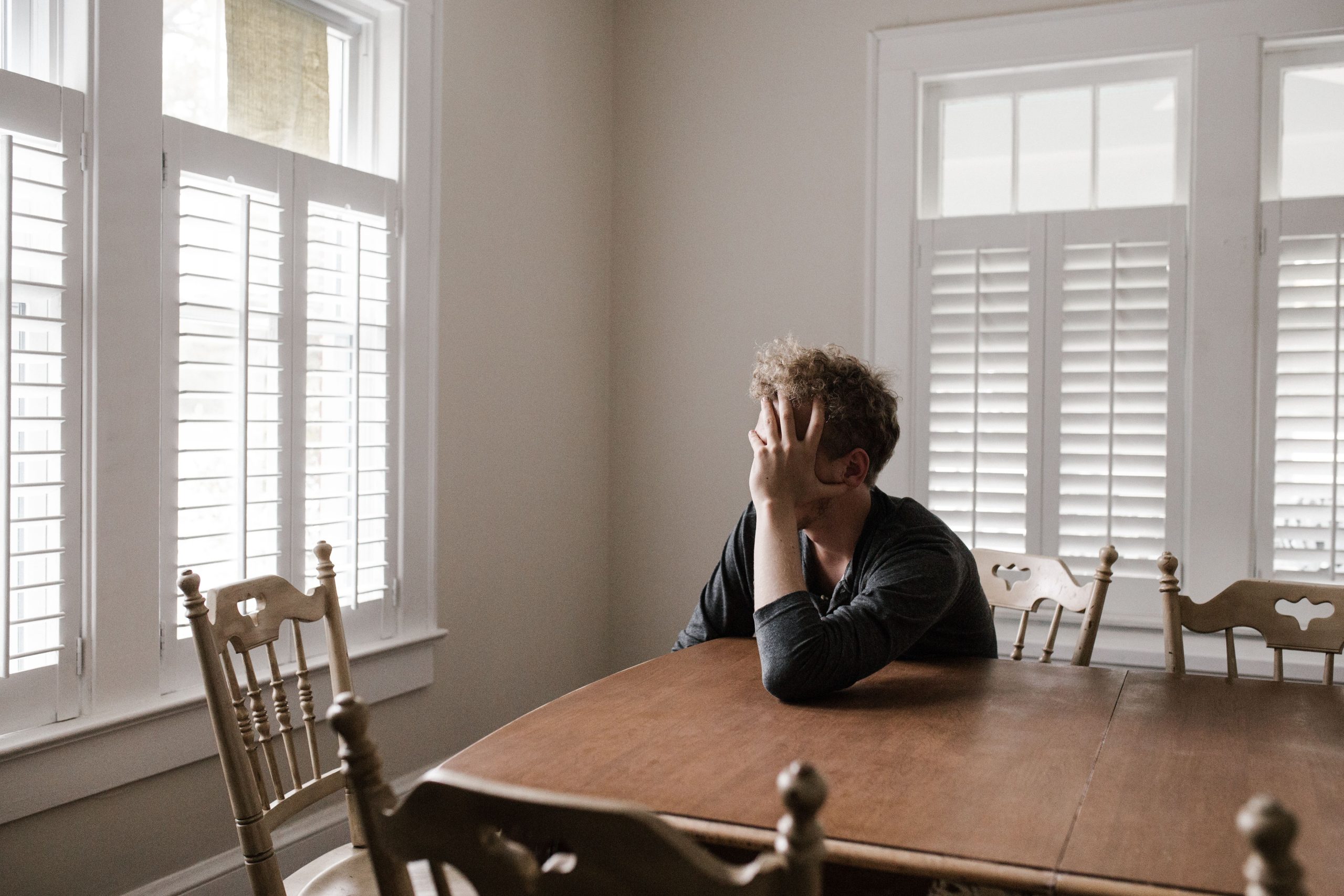
Low energy. Poor concentration. Low motivation. Reduced sex drive. Weaker workouts.
Many men over 40 hear those symptoms and immediately think:
My testosterone must be low.
Sometimes it is.
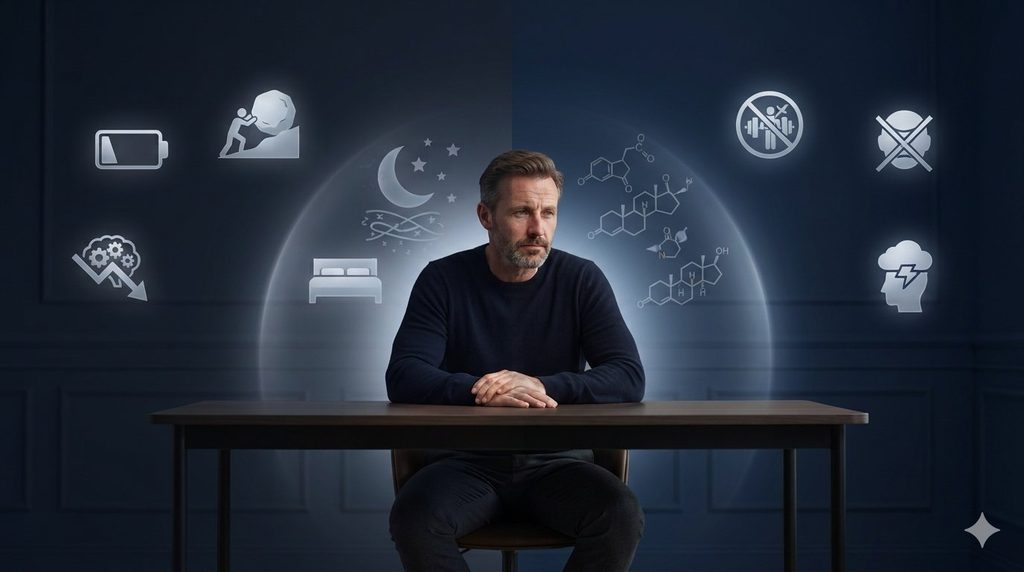
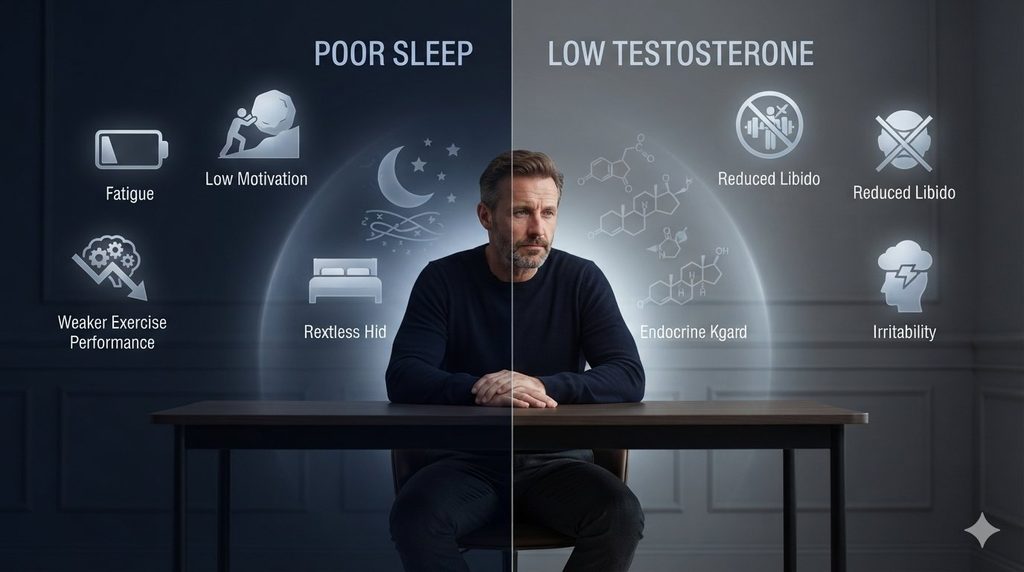
But poor sleep can produce many of the same symptoms, and in some cases sleep problems can also contribute to lower testosterone levels.
That makes things confusing.
You can feel like you have low testosterone when the real problem is chronic sleep deprivation, sleep apnea, or both.
The smartest approach is not guessing.
It is understanding where the symptoms overlap, what makes them different, and when testing makes sense.
Why Sleep and Testosterone Get Confused
Testosterone production follows a daily rhythm.
Levels are generally higher earlier in the day, and sleep plays an important role in normal hormone regulation.
A small controlled study published in JAMA found that healthy young men restricted to about five hours of sleep per night for one week had daytime testosterone levels roughly 10 to 15 percent lower than when they were well rested. The study was small and involved young men, so it should not be treated as proof that every sleep deprived man will experience the same drop. But it demonstrates that sleep restriction can influence testosterone. JAMA Network
There is another complication.
Poor sleep itself can cause:
Fatigue
Low motivation
Difficulty concentrating
Irritability
Reduced exercise performance
Daytime sleepiness
Changes in appetite
Lower sexual interest
Some of those look remarkably similar to symptoms associated with testosterone deficiency.
Symptoms That Can Occur With Both
Here is where men often get stuck.
Low Energy
Low testosterone can contribute to reduced energy.
But so can sleeping five or six hours per night.
If you are exhausted because your sleep is poor, taking a testosterone booster is unlikely to solve the real problem.
Poor Concentration
Men with low testosterone sometimes report difficulty concentrating.
Sleep deprivation can do exactly the same thing.
A tired brain does not work at full capacity.
Lower Sex Drive
Low testosterone can reduce libido.
But sexual desire is also affected by:
Sleep
Stress
Depression
Relationship problems
Medication
Alcohol
Chronic illness
Mayo Clinic specifically notes that sleep apnea and other medical conditions can contribute to symptoms that are often blamed on low testosterone. Mayo Clinic
Reduced Motivation
This one is especially difficult to separate.
Low testosterone may affect mood and motivation.
But chronic exhaustion can make even simple activities feel like work.
If you are sleeping badly every night, reduced motivation may be your body asking for recovery rather than more testosterone.
What Symptoms Point More Toward Low Testosterone?
There is no single symptom that proves testosterone is low.
But some symptoms are more suggestive when several occur together.
These can include:
Reduced sex drive
Fewer spontaneous or morning erections
Loss of muscle mass
Reduced strength
Loss of facial or body hair
Reduced bone density
Infertility
Persistent erectile problems
Breast enlargement or tenderness
The Endocrine Society recommends diagnosing hypogonadism only when a man has symptoms consistent with testosterone deficiency and consistently low testosterone levels on proper testing. Symptoms alone are not enough. Endocrine Society
What Symptoms Point More Toward Poor Sleep?
Poor sleep often comes with a different cluster of clues.
You may notice:
Difficulty waking up
Daytime sleepiness
Needing excessive caffeine
Falling asleep while watching television
Poor concentration
Irritability
Morning headaches
Snoring
Waking frequently
Dry mouth in the morning
Feeling tired despite spending enough time in bed
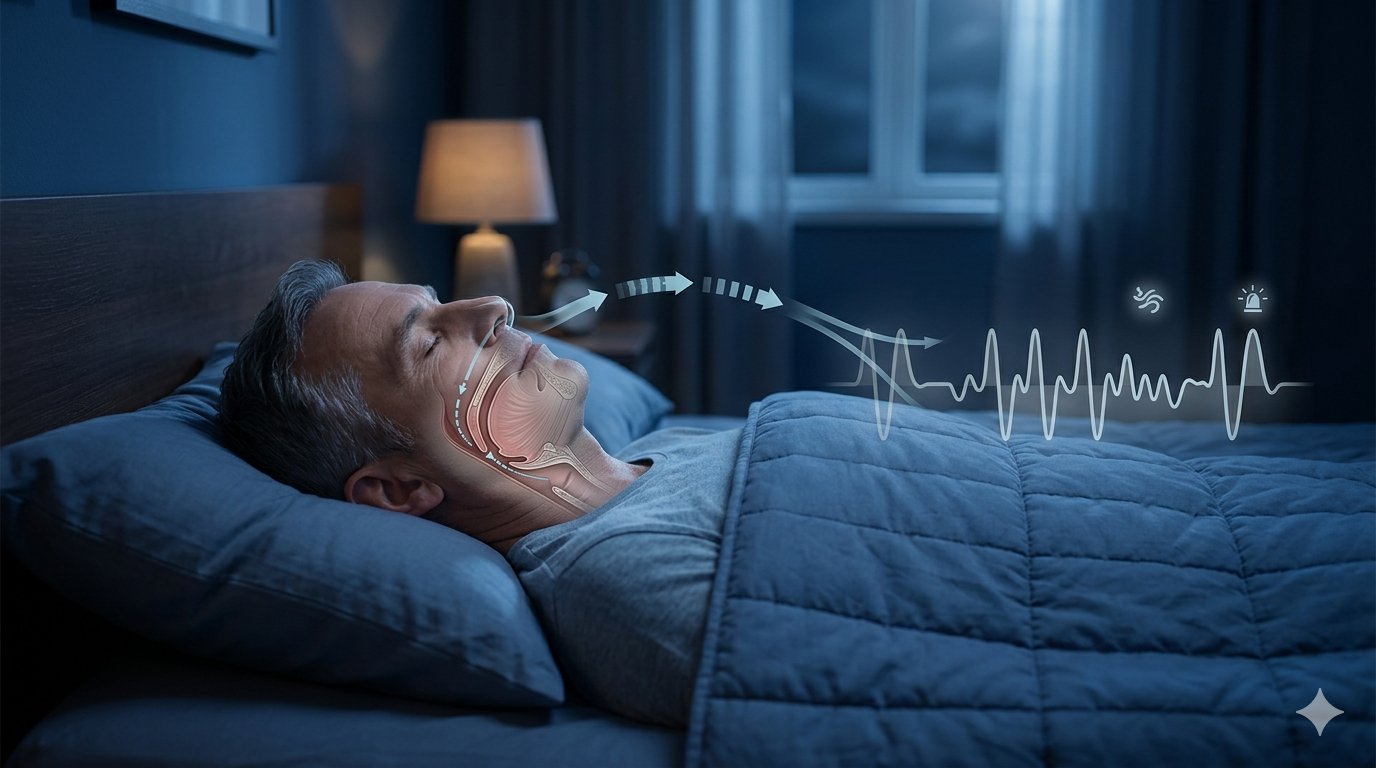
Those last few symptoms deserve special attention because they may point toward obstructive sleep apnea.
Sleep Apnea Changes the Conversation
Sleep apnea is not simply snoring.
With obstructive sleep apnea, breathing repeatedly stops or becomes restricted during sleep.
That can fragment sleep throughout the night even when you do not fully wake up.
You may spend eight hours in bed and still wake feeling exhausted.
Untreated obstructive sleep apnea is recognized as a possible contributor to hypogonadism. Mayo Clinic notes that low testosterone associated with sleep apnea may improve when the sleep disorder is treated. Mayo Clinic
That makes sleep apnea especially important for men over 40.
Risk factors commonly include:
Excess body weight
Large neck circumference
Male sex
Older age
Alcohol use
Certain airway structures
If you snore heavily and wake exhausted every morning, investigate that before assuming testosterone is the entire problem.
Morning Erections Can Offer a Clue, But Not a Diagnosis
Men naturally experience erections during sleep.
A noticeable reduction in spontaneous or morning erections can occur with low testosterone.
But it can also happen because sleep itself is being disrupted.
If you are constantly waking during the night, you may not be getting normal sleep cycles.
So even this symptom cannot cleanly separate sleep problems from hormone problems.
Think of morning erections as one clue, not a home testosterone test.
Poor Sleep Can Affect Your Waistline Too
Sleep and testosterone also overlap through metabolic health.
Poor sleep can make weight management harder by affecting appetite, energy, food choices, and physical activity.
Weight gain, particularly around the abdomen, is strongly associated with metabolic problems and lower testosterone in many men.
That means a cycle can develop:
Poor sleep → lower energy → less activity → easier weight gain → worse sleep → poorer metabolic health
For some men, sleep apnea can become part of that cycle as body weight increases.
This is one reason fixing sleep can have effects far beyond simply feeling less tired.
Can Better Sleep Raise Testosterone?
Sometimes improving sleep may help, particularly when a genuine sleep disorder is contributing to the problem.
But avoid turning that into another exaggerated promise.
Sleeping eight hours does not guarantee a dramatic testosterone increase.
If testosterone is low because of:
Testicular disease
Pituitary problems
Certain medications
Chronic illness
Genetic conditions
Other medical causes
sleep alone will not fix it.
The goal should be identifying the cause rather than assuming one lifestyle change cures everything.
Should You Take a Testosterone Test or Fix Your Sleep First?
In many cases, you can work on both.
If your symptoms are mild and you know you are sleeping badly, improving sleep is an obvious place to begin.
But if you have more specific symptoms of testosterone deficiency, such as persistent low libido, loss of spontaneous erections, unexplained muscle loss, infertility, or other hormonal changes, testing may also make sense.
You do not need to choose between:
Sleep or testosterone.
Sometimes both deserve attention.
How Testosterone Should Be Tested
Testosterone should not be diagnosed from a home symptom checklist.
Blood testing is required.
Because testosterone levels are generally highest earlier in the day, testing is commonly performed in the morning.
Mayo Clinic notes that testing is usually done between about 8 and 10 a.m., and measurements may be repeated on more than one day. Mayo Clinic
The Endocrine Society also recommends confirming low testosterone with a repeat morning measurement before making the diagnosis. Endocrine Society
The American Urological Association similarly recommends two separate morning testosterone measurements before clinical intervention. American Urological Association
One low result does not automatically mean you have chronic testosterone deficiency.
Why You Should Not Test After a Terrible Night
This is worth thinking about.
Sleep loss and acute illness can temporarily influence hormone measurements.
If you slept three hours, are severely stressed, or are sick, the result may not reflect your usual state.
That does not mean you should manipulate testing conditions.
It means doctors interpret testosterone levels in context.
Hormones are not static numbers.
What About TRT If You Have Sleep Apnea?
This is an important safety issue.
The Endocrine Society recommends against starting testosterone therapy in men with untreated severe obstructive sleep apnea. Endocrine Society
That does not mean every man with sleep apnea can never receive TRT.
It means the sleep disorder should be properly evaluated and managed.
This is another reason buying testosterone products without understanding your sleep health is a bad strategy.
A Simple Way to Think About Your Symptoms
Ask yourself these questions.
How am I actually sleeping?
Not how many hours are you in bed.
How well are you sleeping?
Do you:
Snore loudly?
Wake repeatedly?
Wake with headaches?
Feel exhausted during the day?
Need large amounts of caffeine just to function?
If yes, sleep deserves attention.
Are there more specific hormone symptoms?
Have you experienced:
Significant libido changes?
Loss of morning erections?
Unexplained muscle loss?
Reduced body hair?
Fertility problems?
If yes, discuss testosterone testing with a healthcare professional.
Has your waistline changed?
Increasing abdominal fat can worsen sleep, metabolic health, and hormone health.
That makes waist management relevant to both sides of the problem.
Are medications involved?
Certain medications can influence sleep, libido, energy, and testosterone.
Review your medications with your healthcare provider rather than stopping anything yourself.
What You Can Do Tonight
Improving sleep does not require a complicated biohacking routine.
Start with the obvious things.
Keep a Consistent Schedule
Try to go to bed and wake up at roughly the same time.
Give Yourself Enough Time to Sleep
Five hours is not enough for most adults.
Reduce Late Alcohol
Alcohol may make you sleepy initially while disrupting sleep quality later in the night.
Watch Late Caffeine
Caffeine can remain active for hours.
If you struggle with sleep, experiment with stopping it earlier.
Keep the Bedroom Dark and Cool
Make sleeping easier for your body rather than harder.
Take Snoring Seriously
If your partner says you stop breathing, gasp during sleep, or snore extremely loudly, do not ignore it.
Discuss sleep apnea evaluation with a healthcare professional.
What You Can Do for Testosterone Health
Regardless of whether your testosterone is low, the fundamentals still matter.
Strength train regularly.
Maintain a healthy waistline.
Eat adequate protein.
Stay active.
Get enough sleep.
Limit excessive alcohol.
Manage diabetes and other metabolic conditions.
Get medical testing when symptoms justify it.
These habits support much more than testosterone.
They support your entire health.
Do Not Chase the Wrong Problem
This is the main takeaway.
A man who is chronically sleep deprived may convince himself he needs testosterone.
Another man may spend months trying to improve his sleep when he actually has genuine hypogonadism.
Both situations happen.
The answer is not guessing.
It is looking at the full picture.
The Bottom Line
Poor sleep and low testosterone can look surprisingly similar.
Both may involve:
Low energy
Reduced motivation
Poor concentration
Lower libido
Mood changes
Reduced exercise performance
And sometimes they occur together.
The most practical approach is:
Fix obvious sleep problems.
Take possible sleep apnea seriously.
Pay attention to more specific symptoms of testosterone deficiency.
Get properly tested when necessary.
Do not assume every bad day after 40 is low testosterone.
And do not assume poor sleep is harmless.
Sometimes the problem is your hormones.
Sometimes it is your sleep.
Sometimes it is both.
Finding out which one you are dealing with is far more useful than chasing another quick fix.
Medical Disclaimer
This article is for educational purposes only and does not replace professional medical advice, diagnosis, or treatment. Persistent fatigue, sexual changes, sleep problems, or symptoms of sleep apnea should be discussed with a qualified healthcare professional.