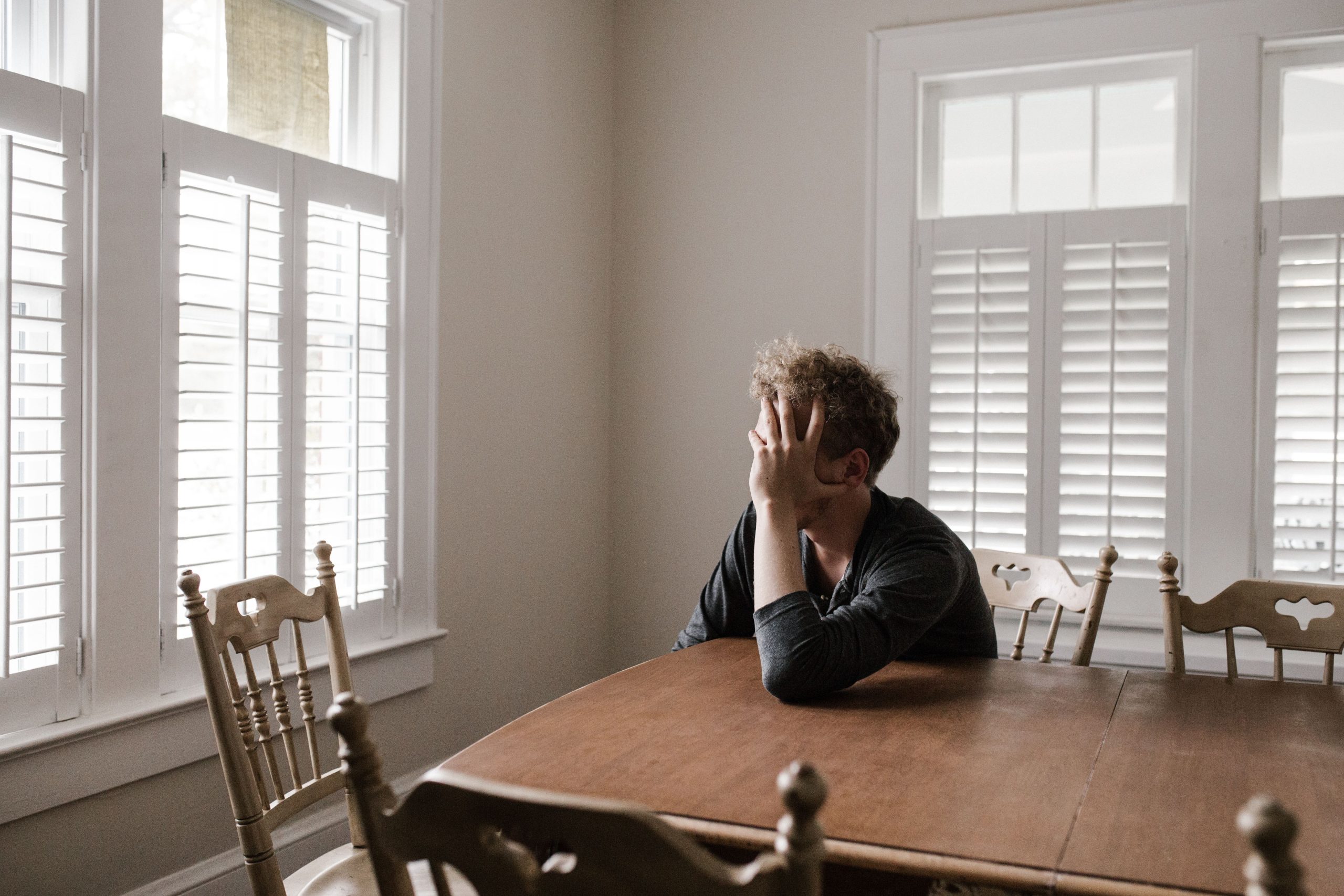
Stress Is Shrinking Your Brain — And Here’s the Proof
Chronic stress doesn’t just make you feel worn down. It physically changes the structure of your brain — and most men have no idea it’s happening.
Most guys think of stress as a feeling — something that’s uncomfortable but temporary. You push through it, things calm down, and you move on. But here’s the problem with that thinking: stress isn’t just happening in your head. It’s happening to your head. The brain you’re using right now is being physically shaped by every week of chronic stress you’ve lived through. And for a lot of men, it’s not being shaped in a good direction.
Meet Cortisol — Your Body’s Stress Alarm
When something stresses you out — a deadline, a fight, a near-miss on the freeway — your brain fires off a chemical signal and your adrenal glands pump out a hormone called cortisol. That’s your body’s alarm system doing exactly what it’s supposed to do. Cortisol sharpens your focus, floods your muscles with energy, and gets you ready to deal with whatever’s in front of you. Short term, it’s genuinely useful.
The problem starts when the alarm never turns off.
When stress becomes a permanent background noise — a job that’s always on fire, money problems that don’t go away, relationships that feel like work — your body keeps pumping out cortisol like it’s still in crisis mode. And cortisol that has nowhere to go starts doing damage. It doesn’t just stress you out mentally. It starts changing the physical structure of your brain.
What Chronic Stress Actually Does to Your Brain
This is where it gets real. There’s a part of your brain called the hippocampus — it sits deep in the temporal lobe and it’s basically your brain’s memory and learning center. It’s where new information gets stored, where you navigate familiar places, where you make sense of what’s happening around you.
Chronically elevated cortisol attacks the hippocampus directly. According to the National Institutes of Health, people under chronic stress show measurable hippocampal shrinkage of 10 to 15% on MRI scans. That’s not a subtle change. That’s a visible structural loss in one of the most important parts of your brain.
“Cortisol exposure for just three weeks can shrink the brain’s dendritic connections by as much as 20% — reducing the brain’s resilience and its ability to bounce back.”
— Harvard Medical School Research, cited in Medical Daily, 2025But it doesn’t stop there. Research published in Frontiers in Aging Neuroscience (2026) found that chronic stress triggers a nasty feedback loop: the hippocampus normally helps shut down the stress response when the danger is gone. But when cortisol damages the hippocampus, it loses that ability — which means cortisol keeps rising, which causes more hippocampal damage, which means even less ability to calm the stress response. Round and round it goes.
Meanwhile, another part of your brain — the amygdala, which handles fear and emotional reactions — becomes up to 30% more reactive under chronic stress. So you’re simultaneously losing your memory center and cranking up your fear center. Your brain is literally getting worse at thinking clearly and better at feeling threatened.
🧠 The Three Brain Regions Stress Hits Hardest
Memory, learning, and navigation. Shrinks 10–15% under chronic cortisol. Starts struggling to form new memories and regulate emotion.
Decision-making, focus, and impulse control. Cortisol impairs this region — which is why stressed-out men make worse decisions and snap more easily.
Fear and emotional response center. Gets up to 30% more reactive under stress — making you more anxious, more defensive, and harder to calm down.
Chronic stress throws off serotonin, dopamine, and norepinephrine — the brain’s chemical messengers. This directly drives anxiety, low mood, and foggy thinking.
What This Looks Like in Real Life
This isn’t abstract science. These brain changes show up in everyday life in ways most men chalk up to getting older, being tired, or just “being stressed.” But the symptoms are actually signs of structural change happening inside your skull.
You forget things more than you used to. Not big things — just little ones that add up. You walk into a room and can’t remember why. You read something and immediately lose it. Your patience is shorter than it used to be. Small things set you off. You make decisions you later regret and you don’t quite know why you made them. You feel overwhelmed more easily, and you take longer to recover from setbacks.
That’s not weakness. That’s your hippocampus shrinking, your prefrontal cortex being suppressed, and your amygdala running hotter than it should. It’s biology — and it’s reversible, if you do something about it.
The Good News: Some of This Can Be Reversed
✅ Your Brain Can Recover
This is the part most stress articles skip over. Some of the damage from chronic stress is reversible. Research shows that if cortisol levels are brought down and stabilized, the brain begins structural recovery within 6 to 12 months. The hippocampus can regrow neurons. Dendritic connections can rebuild. The amygdala can calm back down.
Your brain has a property called neuroplasticity — the ability to physically reshape itself based on your environment and habits. The same mechanism that lets stress damage it is the mechanism that lets you repair it. The key is consistently doing things that lower cortisol and give your brain space to recover.
What Actually Lowers Cortisol — According to Science
Forget the generic advice about “self-care.” Here’s what the research actually backs:
-
Cortisol Drop: Up to 21% Get outside for 20 minutes A study in Frontiers in Psychology found that just 20 minutes in a natural setting — a park, a trail, anywhere with trees — reduces cortisol by 21%. You don’t need to hike a mountain. Sitting on a bench in the park counts. This effect is completely separate from exercise, meaning you get it just from being in nature.
-
Cortisol Drop: Significant — with one catch Exercise — but keep it under 45 minutes Regular moderate exercise lowers cortisol after workouts and over time rebuilds the brain structures stress damages. A 2025 network meta-analysis found yoga had the strongest cortisol-lowering effect of any exercise type. But there’s a catch: sessions longer than 45 minutes of intense exercise can actually spike cortisol. Thirty to 45 minutes of moderate movement is the sweet spot.
-
Works in minutes Breathwork — specifically cyclic sighing A 2023 Stanford randomized controlled trial published in Cell Reports Medicine found that five minutes of cyclic sighing daily (a double inhale through the nose followed by a long exhale through the mouth) reduced cortisol more effectively than mindfulness meditation. Box breathing — in for 4 counts, hold for 4, out for 4, hold for 4 — activates the parasympathetic nervous system within minutes.
-
Cortisol Drop: ~15% over 8 weeks Mindfulness — even 10 minutes a day A large 2024 meta-analysis in Psychoneuroendocrinology reviewed 58 randomized controlled trials and confirmed that mindfulness-based practices are among the most effective at reducing morning cortisol levels. You don’t need to sit cross-legged for an hour. Ten minutes of focused breathing — eyes closed, phone down — done daily for 8 weeks shows measurable cortisol reduction.
-
Non-negotiable Sleep — the most underrated cortisol fix Poor sleep raises cortisol. High cortisol wrecks sleep. It’s the same feedback loop as the hippocampus — and it compounds fast. Getting 7 to 9 hours of quality sleep is not optional if you want to manage stress. No supplement, no breathing exercise, no habit stack overrides the damage of chronic sleep deprivation.
-
Starts in the gut Cut the cortisol-spiking foods High refined sugar, excess caffeine, and alcohol all directly elevate cortisol or worsen the stress response. On the flip side, omega-3 rich foods like salmon and walnuts, magnesium-rich foods like spinach and almonds, and fermented foods for gut health all support a healthier stress response. Dark chocolate above 70% cocoa also contains compounds shown to reduce stress hormones — one of the few genuinely good pieces of nutrition news.
The Bottom Line
Stress isn’t just a mood. It’s a biological process that, left unchecked, physically changes the structure of the organ running your entire life. The shrinkage in your hippocampus, the overactive amygdala, the impaired prefrontal cortex — these aren’t hypothetical risks. They show up on MRI scans in people who’ve been chronically stressed for years.
The men most at risk are the ones who treat stress like a badge of honor — who are proud of how much they can take, how little sleep they get, how hard they push. That toughness has a real biological cost, and it shows up in their memory, their decisions, their patience, and their long-term brain health.
The good news — and this is genuinely good news — is that the brain responds. Go outside. Move your body. Sleep. Breathe. These aren’t soft suggestions. They’re the actual mechanisms by which your brain rebuilds itself. Twenty minutes in a park isn’t a luxury. It’s a 21% cortisol reduction. Start there.
Sources
- National Institutes of Health. Hippocampal shrinkage and cortisol elevation in chronic stress. Referenced in Medical Daily, December 2025. medicaldaily.com
- Harvard Medical School. Cortisol exposure and dendritic spine reduction. Referenced in Medical Daily, 2025.
- Brighten J. The Connection Between High Cortisol Levels and Cognitive Function. DrBrighten.com. Last reviewed October 3, 2024. drbrighten.com
- Science Times. How Chronic Stress and Elevated Cortisol Levels Impact Your Brain. November 11, 2025. sciencetimes.com
- Frontiers in Aging Neuroscience. Chronic stress, cortisol dysregulation, and neurodegenerative vulnerability: mechanistic pathways linking HPA-axis dysfunction to Alzheimer’s disease risk. July 2026. frontiersin.org
- Frontiers in Aging Neuroscience. Serum cortisol is negatively related to hippocampal volume, brain structure, and memory performance in healthy aging and Alzheimer’s disease. April 2023. frontiersin.org
- Li X, Huang J, Zhu F. The Optimal Exercise Modality and Dose for Cortisol Reduction in Psychological Distress: A Systematic Review and Network Meta-Analysis. Sports (MDPI). Published November 24, 2025. ncbi.nlm.nih.gov
- Rogerson O, Wilding S, Prudenzi A, O’Connor DB. Effectiveness of stress management interventions to change cortisol levels: a systematic review and meta-analysis. Psychoneuroendocrinology. 2024 Jan;159:106415. pubmed.ncbi.nlm.nih.gov
- Huberman A et al. Brief structured respiration practices enhance mood and reduce physiological arousal. Cell Reports Medicine, 2023. (Cyclic sighing Stanford RCT)
- Hunter MR et al. Urban Nature Experiences Reduce Stress in the Context of Daily Life Based on Salivary Biomarkers. Frontiers in Psychology. 2019. (20-minute nature / 21% cortisol reduction)
- Stanford Lifestyle Medicine. How Exercise Balances Cortisol Levels. April 23, 2025. lifestylemedicine.stanford.edu
- The Metabolic Journal. How to Lower Cortisol Naturally: 12 Science-Backed Methods. Updated May 2026. themetabolicjournal.com