Low testosterone rarely announces itself loudly.
It creeps in quietly, masked as stress, aging, or “just being tired.” Most men don’t realize what’s happening until years later, when weight gain, low drive, and constant fatigue feel permanent.
If you’re a man over 30, these are the real signs of low testosterone, not the cartoon versions you see online.
Why Low Testosterone Is Often Missed
Doctors usually flag testosterone only when levels are severely low.
But many men suffer symptoms long before lab numbers fall outside the “normal” range. That range is wide, and misleading.
You can be “normal” on paper and still feel terrible.
The 10 Most Common Signs of Low Testosterone in Men
1. Constant Fatigue (Even After Sleep)
This isn’t normal tiredness.
Men with low testosterone often wake up exhausted, rely on caffeine, and hit an energy wall by mid-afternoon. Testosterone plays a major role in energy metabolism and recovery.
2. Low Motivation and Drive
You don’t feel depressed; you just don’t care.
Projects stall. Work feels heavier. Even things you used to enjoy feel like chores. This is one of the earliest warning signs men ignore.
3. Reduced Sex Drive
This one is obvious but often avoided.
Low libido isn’t just psychological. Testosterone directly affects sexual interest and responsiveness. When levels drop, desire usually follows.
4. Brain Fog and Poor Focus
You read the same paragraph twice.
Low testosterone affects neurotransmitters tied to focus, memory, and mental clarity. Many men mistake this for ADHD, stress, or aging.
5. Increased Belly Fat
Especially around the waist.
Low testosterone shifts how your body stores fat, favoring the abdomen. At the same time, belly fat converts testosterone into estrogen, making the problem worse.
This is a self-feeding loop.
6. Loss of Muscle Despite Training
You’re working out… but getting weaker.
Testosterone is critical for muscle protein synthesis. Without enough of it, progress slows or reverses, even with consistent training.
7. Poor Recovery From Workouts
Soreness lingers longer than it should.
Low testosterone reduces recovery capacity, increases inflammation, and raises injury risk.
8. Mood Changes and Irritability
Low testosterone isn’t always sadness.
It often shows up as:
- Irritability
- Short temper
- Low tolerance for stress
Men chalk this up to pressure, but hormones play a major role.
9. Trouble Sleeping
Low testosterone and poor sleep feed each other.
Men with low T often:
- Wake frequently
- Have shallow sleep
- Feel unrested
And poor sleep further suppresses testosterone production.
10. Feeling “Older” Than You Should
This is hard to explain, but men know it when they feel it.
You don’t feel like yourself anymore. Confidence drops. Vitality fades. This isn’t just mindset; it’s often hormonal.
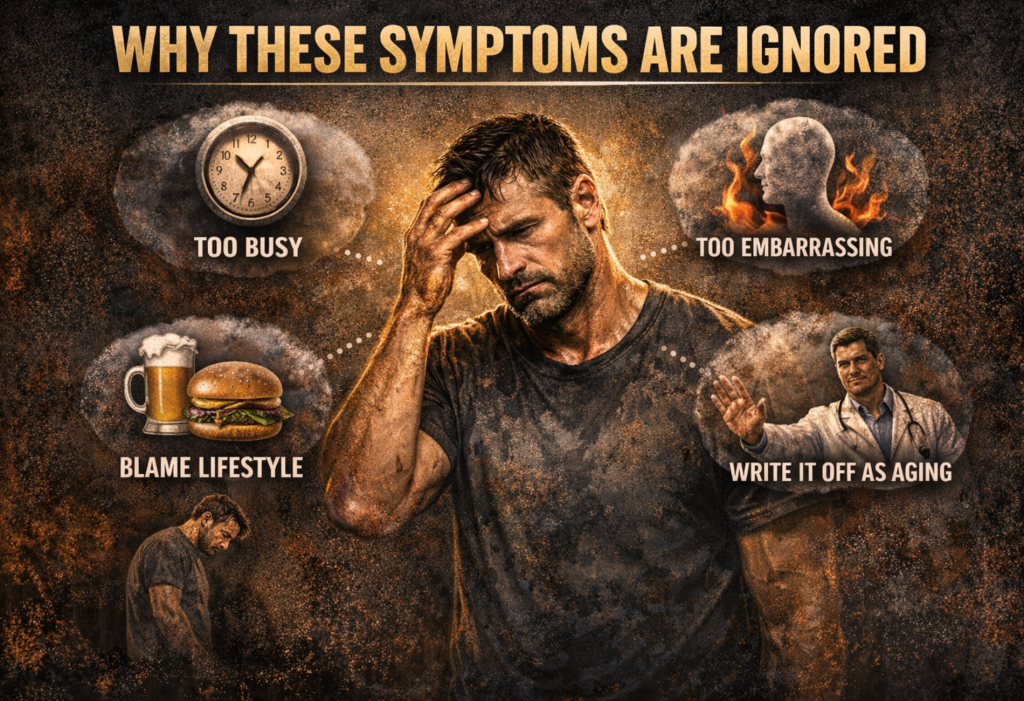
Why These Symptoms Are Ignored
Most men:
- Power through
- Self-medicate with caffeine
- Blame work or age
- Avoid testing
- Avoid conversations about hormones
By the time they act, the problem is deeper.
What To Do If You Recognize These Signs
Start with awareness, not panic.
Low testosterone doesn’t mean you need injections or extreme treatments. Many men improve significantly by addressing:
- Sleep quality
- Stress levels
- Nutrition gaps
- Training style
- Hormone-supportive habits
For some, natural testosterone support can help fill the gaps, especially when nutrient deficiencies and stress are part of the issue.
This is where men often explore options like Top T, a supplement designed to support testosterone naturally while lifestyle changes take effect.
The Bottom Line
Low testosterone doesn’t show up as one big symptom.
It shows up as a slow decline:
- Energy fades
- Motivation drops
- Fat increases
- Confidence slips
The earlier you recognize the signs, the easier it is to reverse course.