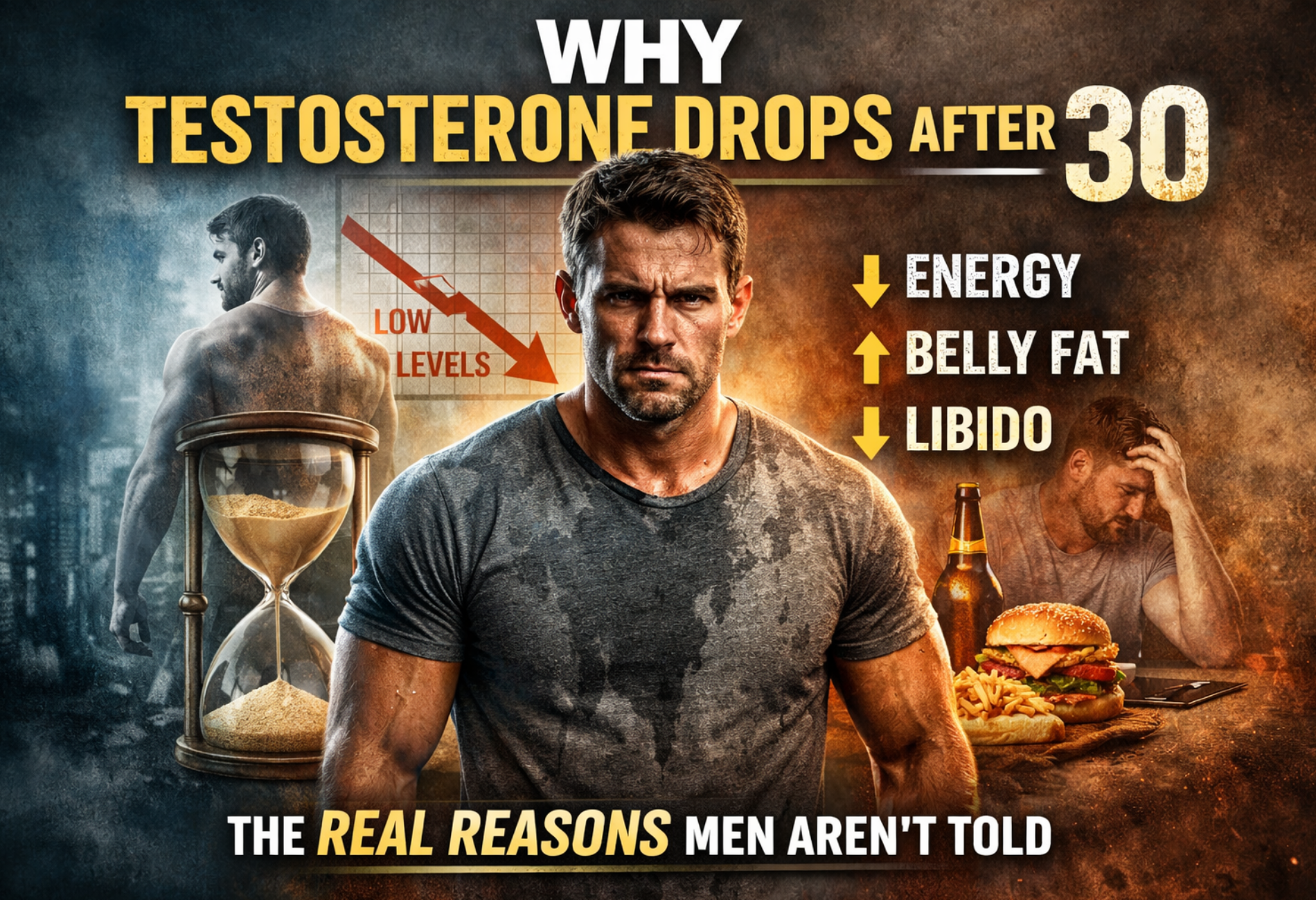
If you’re a man over 30 dealing with stubborn belly fat, let’s get one thing straight:
You don’t have a calorie problem.
You have a hormone problem.
Men cut calories, run more, eat “clean,” and still can’t lose belly fat. That’s not a discipline failure, it’s biology working against them.
Here’s what’s really going on.
Why Belly Fat Targets Men After 30
Belly fat isn’t just stored energy. It’s hormonally active tissue.
Once it accumulates, it actively:
- Suppresses testosterone
- Raises estrogen
- Increases inflammation
- Disrupts insulin sensitivity
This makes belly fat harder to lose the longer it sticks around.
The Testosterone–Belly Fat Feedback Loop
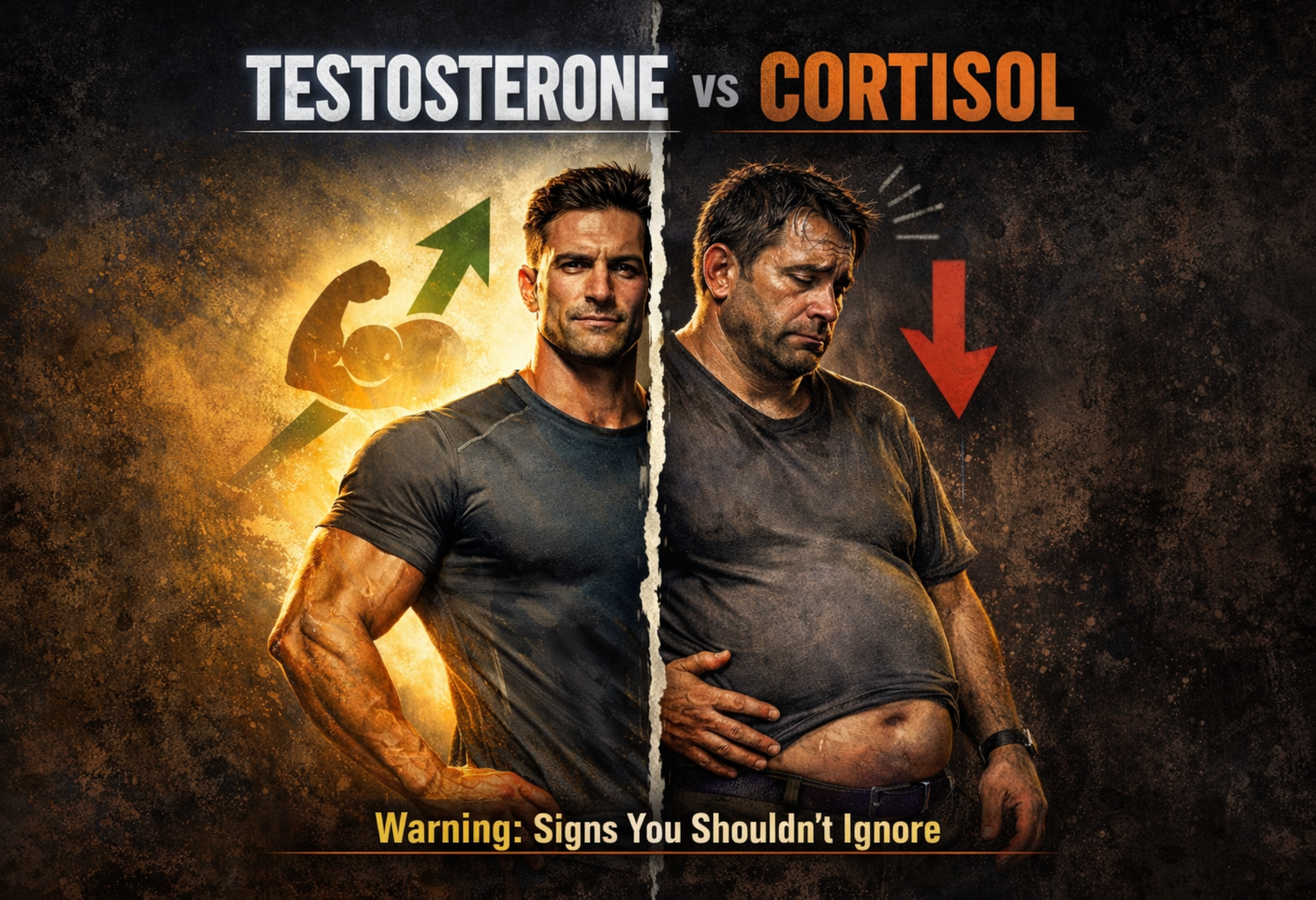
Low testosterone doesn’t just result from belly fat, it creates more of it.
Here’s the vicious cycle most men are stuck in:
- Testosterone drops
- Muscle mass decreases
- Fat storage increases
- Belly fat converts testosterone into estrogen
- Testosterone drops even further
That’s why men feel like their body suddenly “turned against them.”
It kind of did.
Why Cutting Calories Makes It Worse
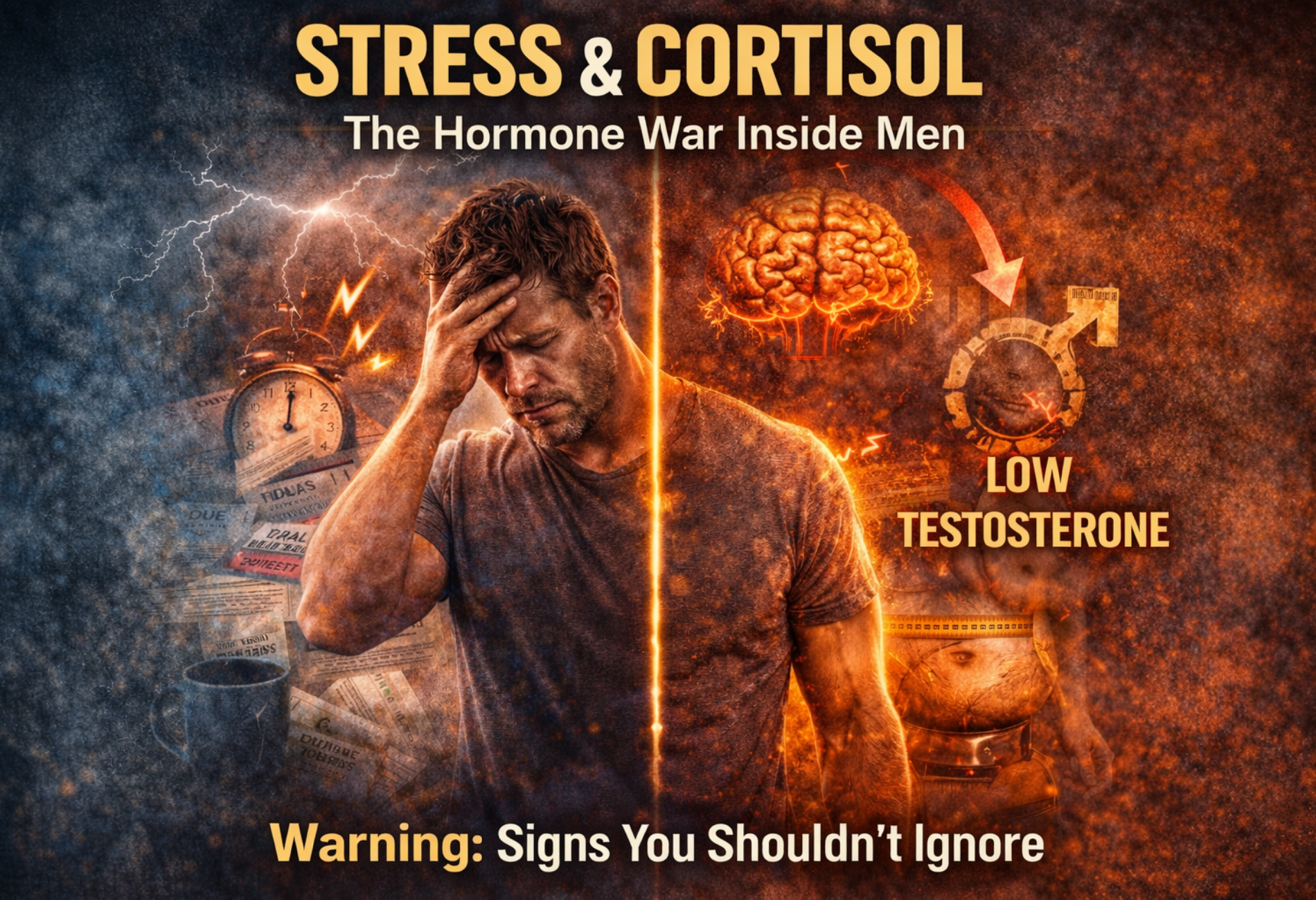
Extreme calorie restriction raises cortisol, your stress hormone.
High cortisol:
- Signals fat storage (especially in the abdomen)
- Breaks down muscle tissue
- Suppresses testosterone production
So when men:
- Eat too little
- Train too hard
- Don’t recover
They unknowingly protect belly fat instead of burning it.
Insulin Resistance: The Hidden Belly Fat Driver
As men age, insulin sensitivity often declines.
When insulin is constantly elevated:
- Fat storage increases
- Fat burning shuts down
- Belly fat becomes “locked in”
This is why:
- Eating less doesn’t help
- Skipping meals backfires
- Random dieting fails
Hormones decide what your body does with calories, not willpower.
Estrogen in Men: The Uncomfortable Truth
Yes, men have estrogen.
But when belly fat increases, estrogen rises too.
Elevated estrogen in men is linked to:
- Fat gain
- Water retention
- Low libido
- Mood swings
- Suppressed testosterone
This hormonal shift is subtle but powerful.
Why Cardio Isn’t the Answer
Long-duration cardio increases cortisol when overused.
For men with belly fat and low testosterone, excessive cardio:
- Burns muscle
- Increases stress
- Slows metabolism
- Worsens hormonal balance
Movement matters, but hormone-friendly training matters more.
What Actually Helps Reduce Belly Fat in Men
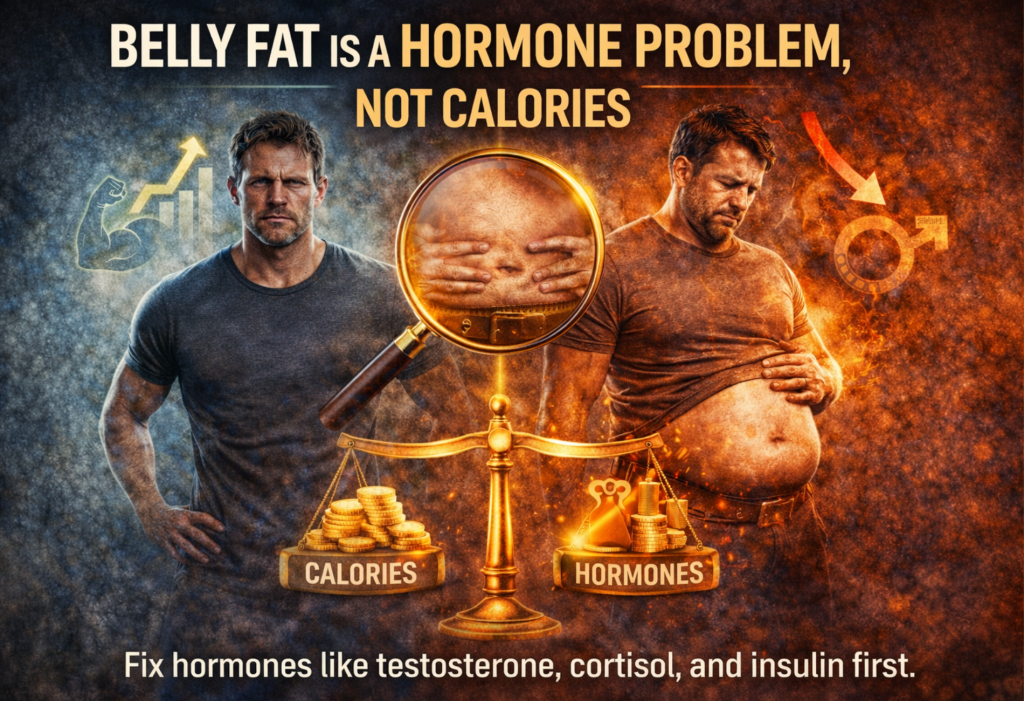
Fix the hormones first. Fat loss follows.
1. Support Testosterone Naturally
Testosterone supports:
- Muscle preservation
- Fat oxidation
- Insulin sensitivity
Men who restore healthy testosterone levels often notice belly fat reduction without extreme dieting.
This is where natural testosterone support can help fill gaps, especially when sleep, stress, and nutrient deficiencies are involved.
2. Reduce Cortisol
Lowering stress is not optional.
This means:
- Better sleep
- Fewer brutal workouts
- Recovery days
- Reducing stimulants
Lower cortisol = easier fat loss.
3. Train for Hormones, Not Exhaustion
Short, intense resistance training with proper rest:
- Supports testosterone
- Preserves muscle
- Improves insulin sensitivity
Grinding yourself into the ground does the opposite.
4. Eat to Support Hormones
Men need:
- Enough protein
- Healthy fats
- Micronutrients (zinc, magnesium, vitamin D)
Starving your body tells it to hold fat, not release it.
Where Supplements Fit (Smartly)
Supplements don’t replace lifestyle — but they support it.
A well-formulated testosterone support supplement can help:
- Counter stress-related hormone suppression
- Support nutrient deficiencies
- Improve energy and motivation during fat loss
This is why many men explore options like Top T as part of a broader hormone-first approach, rather than chasing fat burners that spike stress hormones.
The Bottom Line
If belly fat showed up after 30 and won’t leave, calories aren’t the villain.
Hormones are.
Fix testosterone.
Control cortisol.
Support insulin sensitivity.
Do that, and fat loss stops being a fight.