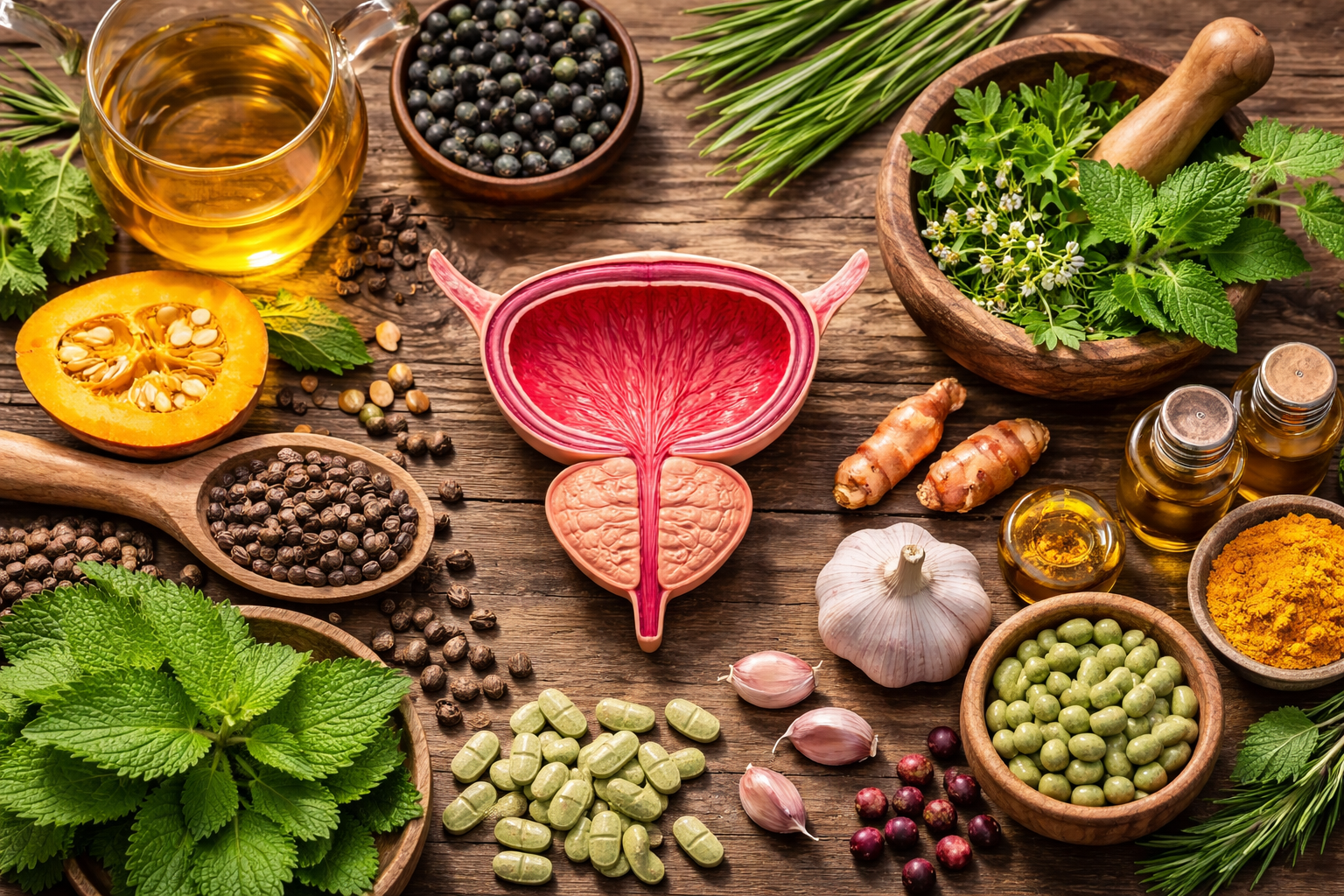
I. Introduction: The Aging Prostate and the Natural Health Shift
The prostate is a walnut-sized gland located just below the bladder that is essential for the male reproductive system, producing approximately one-third of the fluid in semen. As men age, it is common for the prostate to expand; however, excessive growth can trigger significant urinary symptoms.
Benign Prostatic Hyperplasia (BPH) is a nearly universal part of aging, affecting approximately 50% of men in their 60s and nearly 80% of men in their 90s. Due to the prevalence of these issues, a high proportion of patients are turning toward complementary health practices and phytotherapeutic agents to manage symptoms non-invasively.
If you’re looking for a direct answer on how to support your prostate health naturally, I found that the most widely utilized and researched remedies include Beta-sitosterol, Pygeum, and Stinging Nettle root, which are often most effective when combined with a plant-based diet high in lycopene-rich tomatoes and soy. I can also tell you that managing your body fat percentage is one of the most impactful lifestyle changes you can make, as excess fat can shift your hormonal balance and trigger prostate cell division.
However, I strongly recommend you continue reading to get the full, in-depth picture. Not all “natural” supplements are regulated for purity or quality, and while some herbs have centuries of traditional use, modern clinical evidence regarding their effectiveness—particularly for Saw Palmetto—remains mixed. In the following sections, I will dive into the specific biological mechanisms of these herbs, explore emerging indigenous remedies like Croton membranaceus, and highlight the critical “obstructive” signs that mean you must stop self-treating and consult a doctor to rule out serious conditions like prostate cancer.
II. Understanding the Condition: BPH, Prostatitis, and Lower Urinary Tract Symptoms (LUTS)
It is critical to distinguish between different prostate conditions:
- Benign Prostatic Hyperplasia (BPH): This involves the excessive division of normal cells in the transition zone of the prostate. As these cells multiply, they squeeze the urethra, much like a kinked garden hose, which slows or blocks the passage of urine.
- Prostatitis: Unlike BPH, prostatitis is inflammation restricted to the central zone that causes pain but not necessarily enlargement.
- Lower Urinary Tract Symptoms (LUTS): Common symptoms include nocturia (waking up at night to urinate), urinary frequency, sudden urgency, a slow urine stream, and a sensation of incomplete bladder emptying
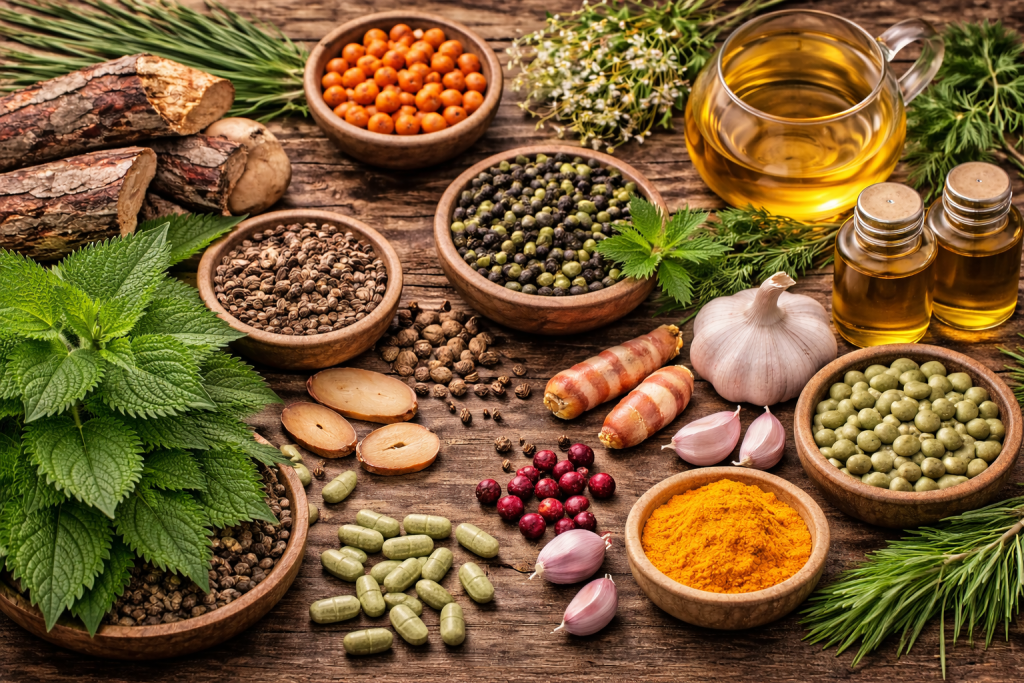
III. The “Big Five” Herbal Remedies: Scientific Evidence and Efficacy
- Saw Palmetto (Serenoa repens): Derived from the berries of a small palm tree, it contains beta-sitosterol and plant estrogens believed to inhibit enzymes that trigger prostate growth. However, modern research is mixed; several high-quality reviews suggest it may be no more effective than a placebo for symptom relief.
- Pygeum africanum: Extracted from the bark of the African plum tree, it has been used for centuries to treat urinary problems. Studies show it can improve urine flow and decrease the amount of urine retained in the bladder.
- Stinging Nettle (Urtica dioica): It is essential to use the root, as the leaf is a diuretic that could worsen symptoms. Research suggests the root can help men fully empty their bladder and decrease the severity of nocturia and urgency.
- Beta-Sitosterol: Found in the South African star grass, these plant sterols have shown evidence of improving urine flow rates and reducing overall BPH symptoms.
- Rye Grass Pollen Extract (Cernilton): Documented for its anti-inflammatory effects, it has been shown to be effective in lowering the urge to urinate in the middle of the night.
IV. Emerging and Regional Traditional Medicine
- Ghanaian Indigenous Medicine: The root extract of Croton membranaceus is a primary remedy in Ghana. Clinical and animal studies indicate it can lead to the shrinkage of the prostate and a significant reduction in Prostate-Specific Antigen (PSA) levels.
- Ayurvedic Alliances: Traditions like Ayurveda utilize Ashwagandha for vitality and stress, Punarnava for fluid balance, and Turmeric (Curcumin) for its rich antioxidant properties to support long-term prostate wellness.
- Vietnamese Herbal Support: An herb called Crila (derived from Crinum latifolium) showed in a study of 157 men that 89% experienced improved urinary function within as little as two months.
V. Lifestyle and Nutritional Strategies for Long-Term Prevention
- Anti-Inflammatory Diet: A plant-based diet high in leafy greens, beans, and seeds is associated with milder BPH symptoms. Men should avoid red meat, alcohol, caffeine, and high-fat diets, which are believed to worsen symptoms.
- Targeted Nutrients: Lycopene (found in tomatoes) and Soy isoflavones are linked to lower risks of prostate issues. Pumpkin seeds contain phytochemicals that may block the conversion of testosterone into dihydrotestosterone (DHT), the metabolite responsible for prostate growth.
- Body Fat and Environment: Excess body fat converts testosterone into estrogen, which can trigger prostate cell division. Furthermore, reducing exposure to xenoestrogens (chemicals in plastics and pollutants that mimic estrogen) is vital for prevention.
VI. Important Considerations: Safety, Quality, and Medical Guidance
It is important to remember that “natural” does not always mean safe. The FDA does not regulate the quality or purity of herbal remedies like prescription drugs, meaning products may have bacterial contamination or inaccurate labeling.
Crucially, using herbs for symptomatic relief can mask underlying prostate cancer. Men should consult a doctor if they experience “obstructive” symptoms, such as a total inability to urinate, which can lead to kidney failure. In many cases, conventional treatments like 5-alpha reductase inhibitors (e.g., Finasteride) or surgery (TURP) are necessary to shrink a significantly enlarged prostate.
VII. Conclusion: A Holistic and Integrative Approach
Prostate wellness is strongest when viewed through the lens of prevention. Experts suggest that men should begin incorporating these herbal allies and lifestyle changes in their 30s and 40s to mitigate growth before symptoms become severe. An integrative approach that combines evidence-based natural medicine with conventional urological care offers the best path toward lifelong health and vitality.