Most men think stress is just mental pressure.
Deadlines. Bills. Family. Work.
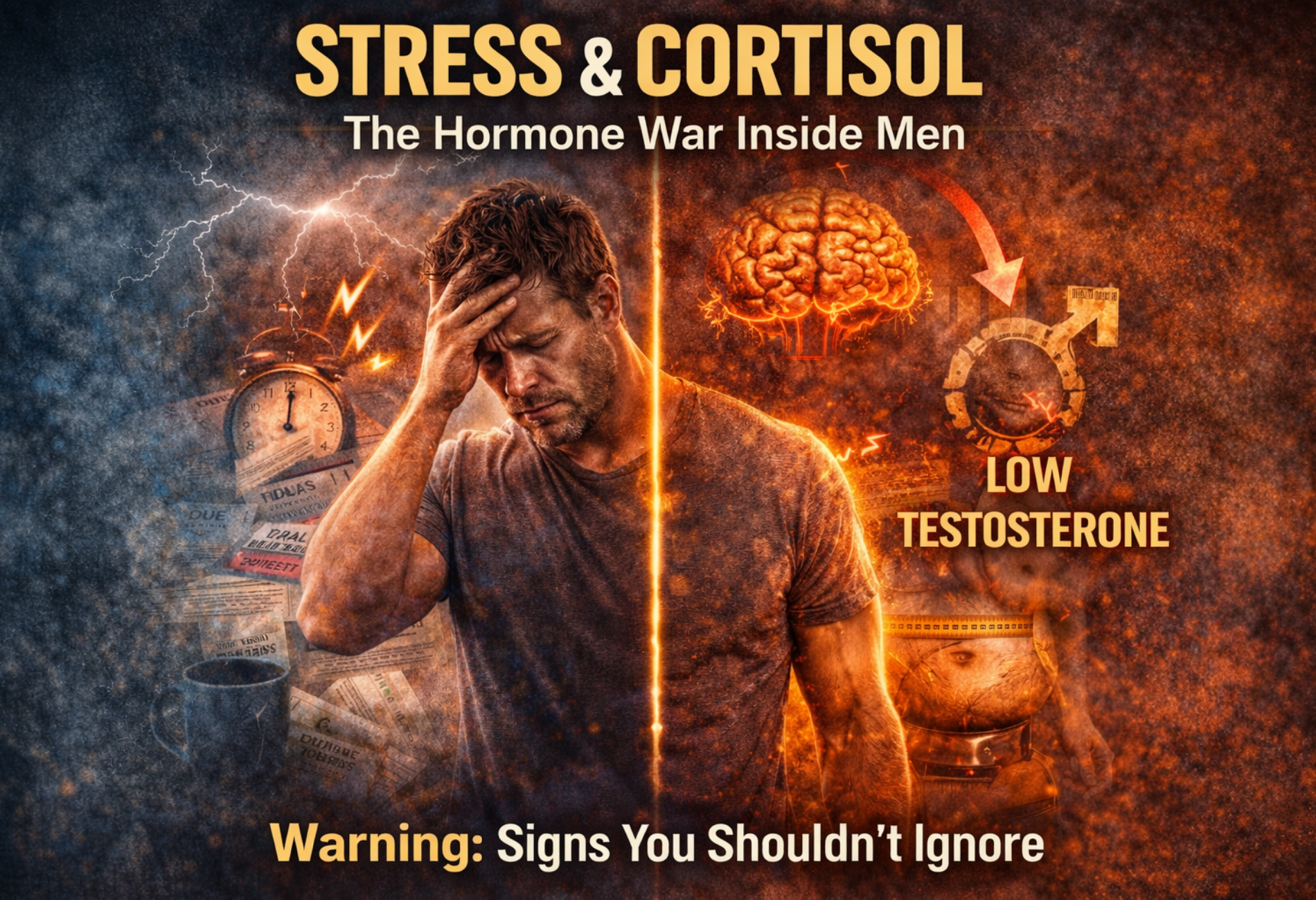
But inside your body, stress is chemical warfare, and testosterone is usually the first casualty.
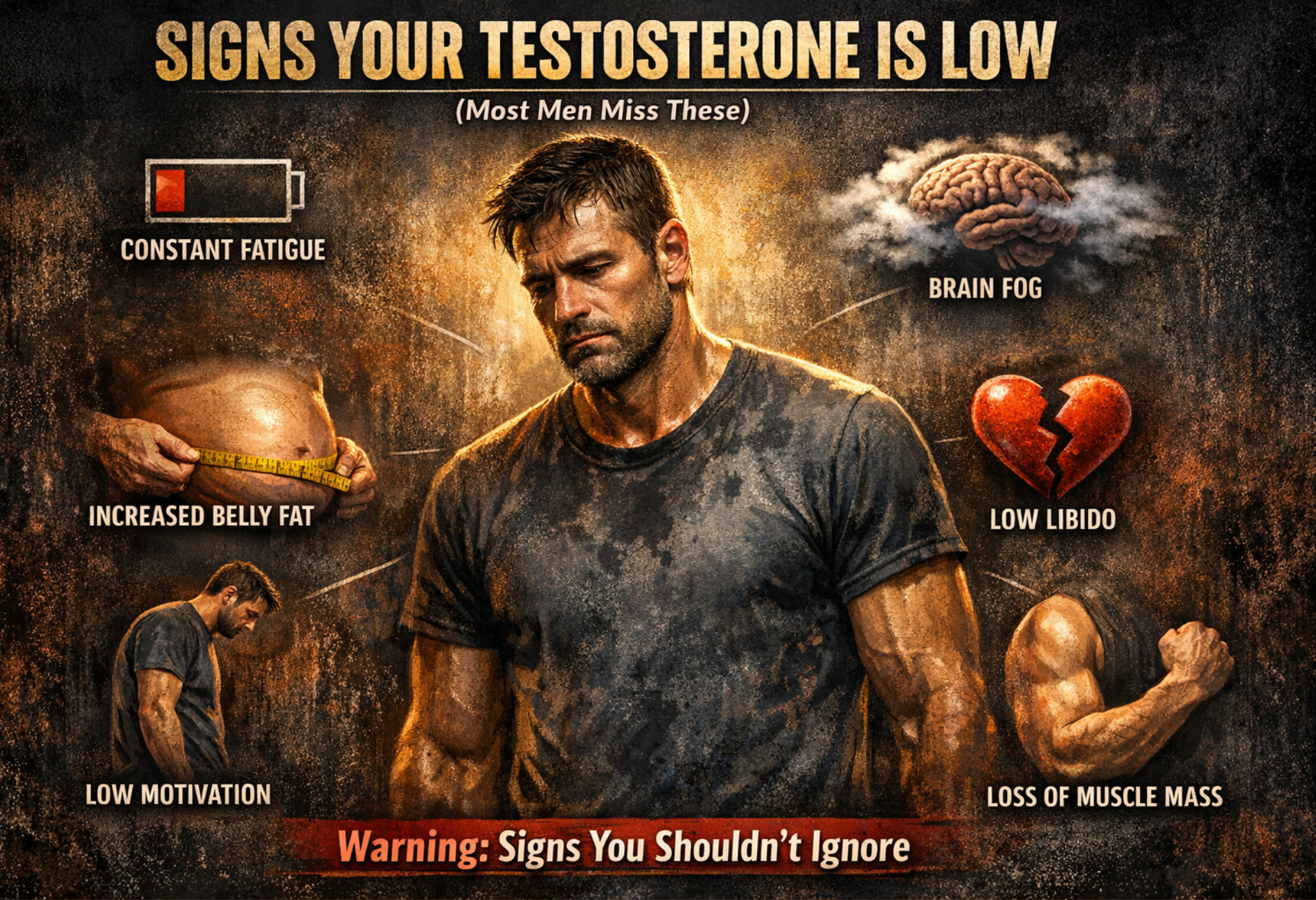
If you’re over 30 and feel tired, soft, irritable, or unmotivated, there’s a good chance cortisol is winning the fight.
What Cortisol Really Does
Cortisol is your primary stress hormone.
In short bursts, it’s useful. It:
- Mobilizes energy
- Sharpens focus
- Helps you survive short-term threats
But modern stress is constant, not short-term.
And when cortisol stays elevated, it becomes destructive.
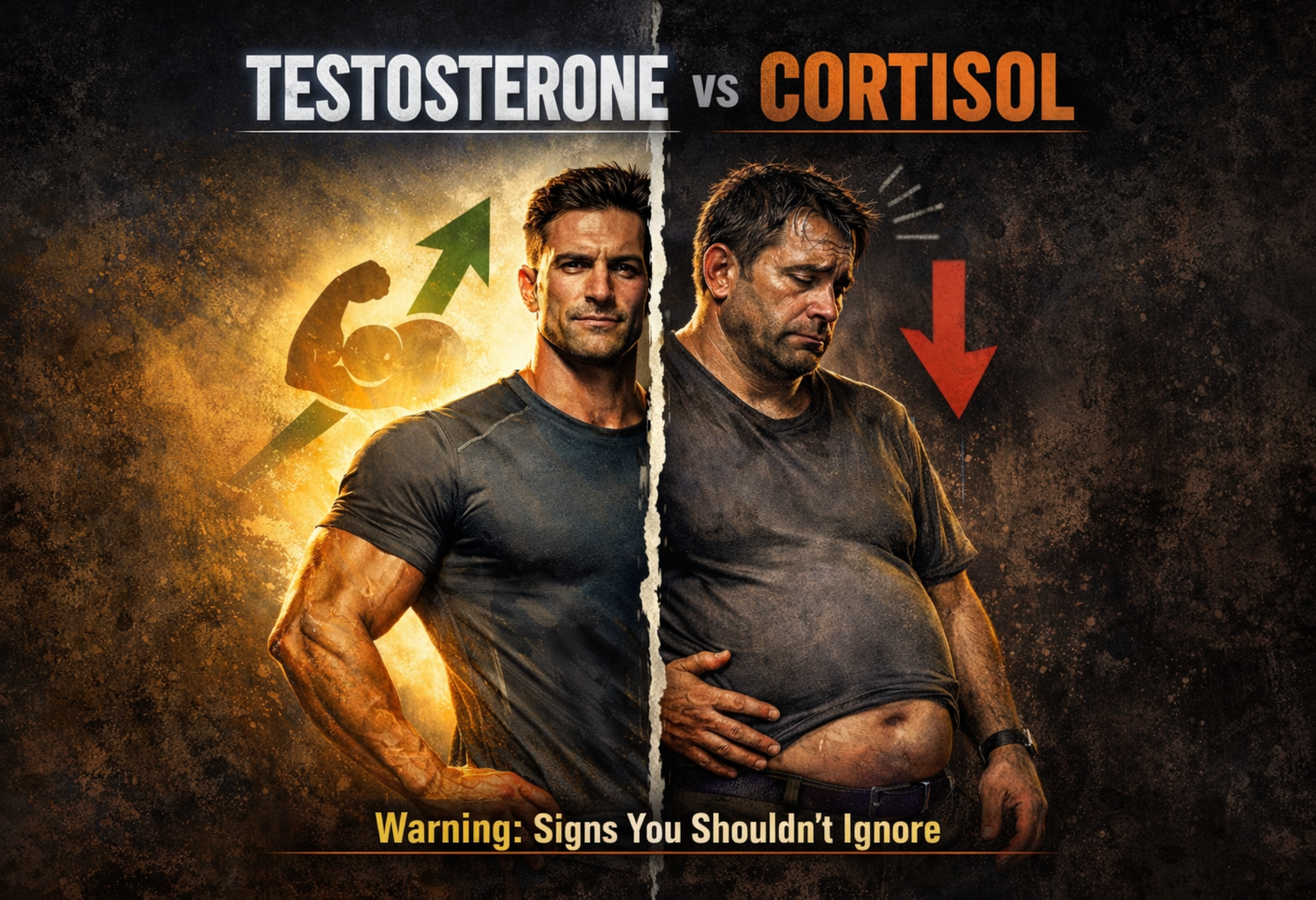
Testosterone vs Cortisol: One Goes Up, the Other Goes Down
Testosterone and cortisol are opposing forces.
When cortisol rises:
- Testosterone production drops
- Muscle breakdown increases
- Fat storage accelerates (especially belly fat)
- Recovery slows
Your body can’t optimize for strength and survival at the same time.
Under stress, it chooses survival.
Why Modern Life Keeps Cortisol High
Men today are under nonstop low-grade stress:
- Long work hours
- Financial pressure
- Poor sleep
- Excessive caffeine
- Constant notifications
- Overtraining
Your nervous system never shuts off.
And your hormones pay the price.
Signs Cortisol Is Dominating Your Hormones
Many men don’t realize cortisol is the problem because symptoms feel “normal.”
Common signs include:
- Wired but tired feeling
- Trouble falling or staying asleep
- Belly fat accumulation
- Cravings for sugar or junk food
- Irritability or short temper
- Low libido despite desire
- Poor recovery from workouts
If this sounds familiar, testosterone is likely being suppressed.
How Stress Blocks Testosterone Production
Cortisol interferes with testosterone in multiple ways:
1. It Signals the Body to Conserve Energy
Testosterone is an “abundance” hormone.
Stress tells your body:
“Now is not the time to build muscle, chase goals, or reproduce.”
So testosterone gets dialed down.
2. It Steals the Building Blocks
Cortisol competes for the same hormonal precursors needed to make testosterone.
High stress literally redirects resources away from testosterone production.
3. It Worsens Sleep (Which Worsens Testosterone)
High cortisol at night prevents deep sleep.
Most testosterone is produced during deep sleep — so this creates a feedback loop:
- Stress → poor sleep
- Poor sleep → lower testosterone
- Lower testosterone → higher stress sensitivity
Why “More Discipline” Makes It Worse
Men respond to stress by pushing harder.
More workouts.
More caffeine.
More restriction.
That’s the wrong move.
Excessive training and undereating raise cortisol even higher, especially in men already running on fumes.
Grinding harder doesn’t fix a hormonal imbalance; it deepens it.
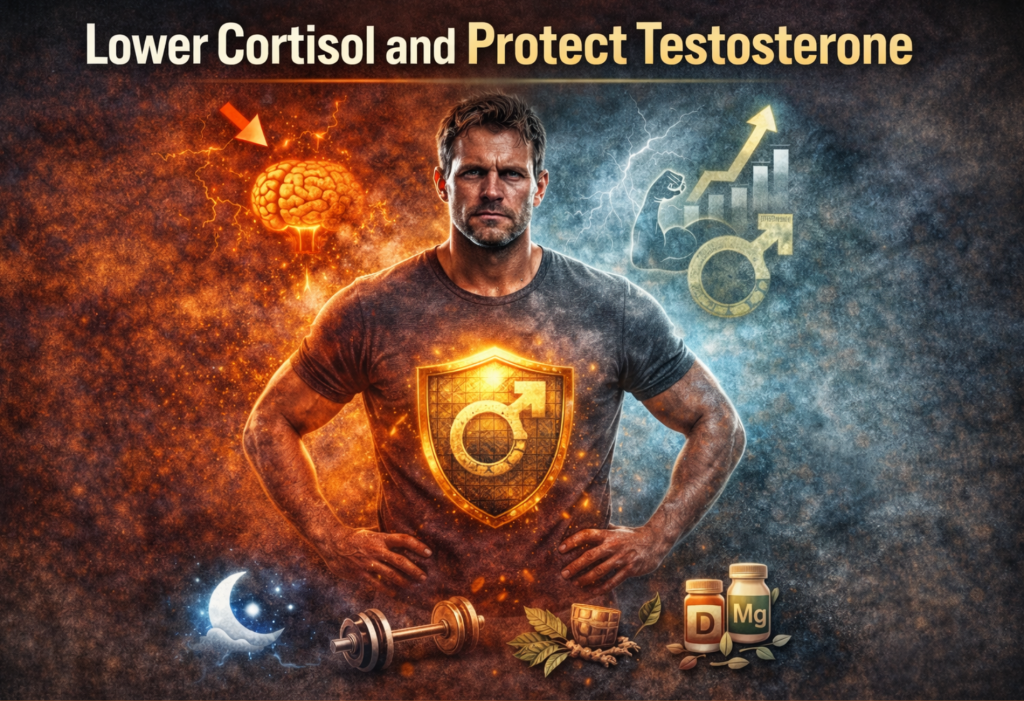
How to Lower Cortisol and Protect Testosterone
This isn’t about becoming soft. It’s about becoming strategic.
1. Fix Sleep First
No supplement beats sleep.
Aim for:
- Consistent sleep times
- Dark, cool room
- No screens late at night
Even small improvements raise testosterone and lower cortisol.
2. Train Smarter, Not Longer
Short, intense resistance training beats long exhaustion sessions.
Limit:
- Daily HIIT
- Long cardio marathons
- Training without recovery days
Hormones respond to recovery, not punishment.
3. Reduce Stimulant Dependence
Caffeine spikes cortisol.
Used sparingly, it’s fine.
Used constantly, it becomes a stress amplifier.
If you “need” caffeine to function, cortisol is already high.
4. Support the Body Under Stress
When stress is unavoidable, support matters.
Adaptogens, minerals, and micronutrients help buffer the stress response and protect testosterone production. This is where men often add targeted support — not as a shortcut, but as reinforcement while lifestyle changes take effect.
The Testosterone–Stress Reality Check
Low testosterone isn’t always the root problem.
Sometimes it’s the result of years of unmanaged stress.
Fix cortisol, and testosterone often follows.
Ignore cortisol, and no fat loss plan, workout, or motivation hack will stick.
The Bottom Line
Men don’t lose testosterone because they’re weak.
They lose it because modern stress never lets their bodies recover.
Lower stress.
Improve sleep.
Train intelligently.
Support hormones strategically.
That’s how men win the hormone war.